


Every guide I read before this trip said the same thing. Don’t go to Edinburgh in August. It’s too crowded, too expensive, and you’ll spend the whole time queuing.
I went in August anyway, and I took my mum and two of her friends with me. Three women in their sixties, in the three busiest weeks the city has all year. We had two days and one fixed appointment: the Royal Edinburgh Military Tattoo.
I’d do it again. But I want to be honest about what it costs you, because most posts about Edinburgh in August are either survival guides or brochures, and the truth sits somewhere in between.
Here are the best things to do in Edinburgh. Follow me on the vlog below
Quick trip info
- Duration: 2 full days, arriving the evening before
- Season: Late August, during the Fringe and the Military Tattoo
- Best for: First-time visitors, anyone travelling with parents or older family, and people who want to see the Tattoo
- Getting there: 1h20 flight or just over 4 hours by train from London
What’s in this guide
- Getting there
- Where to stay
- Day 1: the Old Town, Dean Village and the Tattoo
- Day 2: Holyrood, Calton Hill and Edinburgh Castle
- Visiting Edinburgh with older parents
- What I’d do differently
- Useful links
Getting there
We flew from London and landed just after eight in the evening. The flight is about an hour and twenty minutes, and if you book early it’s usually cheaper than the train.
The train is the nicer journey though. LNER runs from King’s Cross to Edinburgh Waverley in about four hours, with 29 direct services every weekday and advance fares from around £34. Lumo does the same route for less, sometimes under £20 if you book far enough ahead. Waverley station puts you directly under the Old Town, which is a much gentler arrival than an airport with three suitcases.
Getting in from the airport, the Airlink 100 bus runs to Waverley Bridge in about 30 minutes and leaves at least every 10 minutes through the day. The tram is around £7.90 for an adult and drops you in the New Town. Worth checking the tram site before you travel, because Princes Street works have been running a part-route service.
We took a taxi because it was late and everyone was tired, and I’d make the same call again.
Tip: in August, book flights or train the moment you have dates. Prices climb steeply through July.
Where to stay
This is where August actually hurts. Hotel prices in Edinburgh roughly triple during the festivals, and the good places sell out months ahead. If you want to be within walking distance of the Royal Mile, book by spring.
Old Town is the obvious choice for a short trip, and it’s what I’d pick again with older family, because everything is close and you can go back to the room mid-afternoon without it costing you an hour. The trade-off is noise. During the Fringe, the Old Town does not go quiet at night.
New Town is calmer, still walkable, and usually a bit cheaper. Stockbridge and Leith are cheaper again, but you’ll be relying on buses.
Day 1: the Old Town, Dean Village and the Tattoo
The Royal Mile
The Royal Mile runs almost exactly a mile from Edinburgh Castle at the top down to Holyrood at the bottom, and it’s the spine of the Old Town. The narrow passages running off both sides are called closes. Four hundred years ago the buildings either side of them went eleven and twelve storeys up, because nobody wanted to live outside the city walls and the only direction left was up.
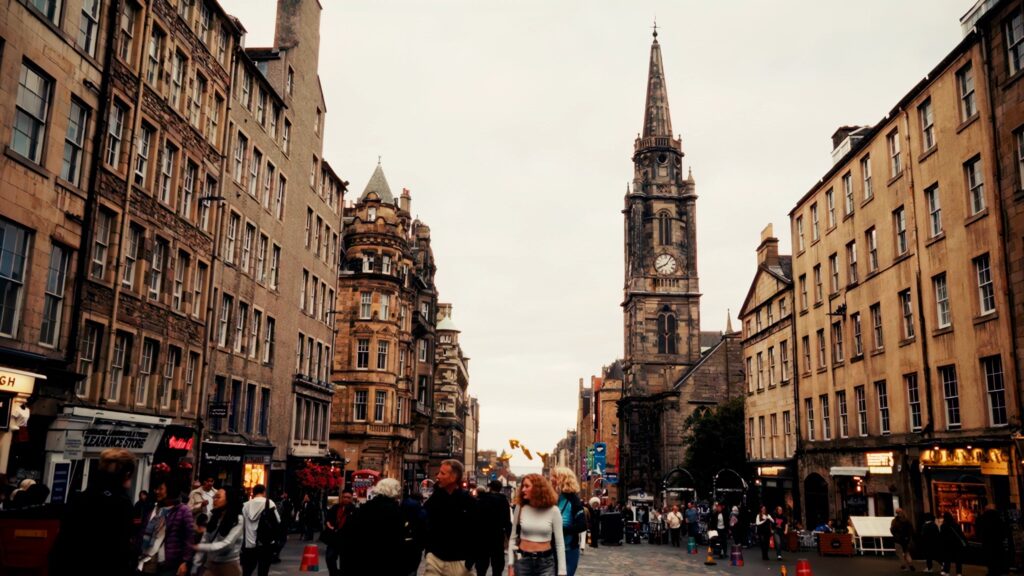
By mid-morning in August this street is a slow-moving crowd with flyers coming at you from every direction. At eight in the morning it’s cobbles and delivery vans, and you can actually see the architecture you came for.
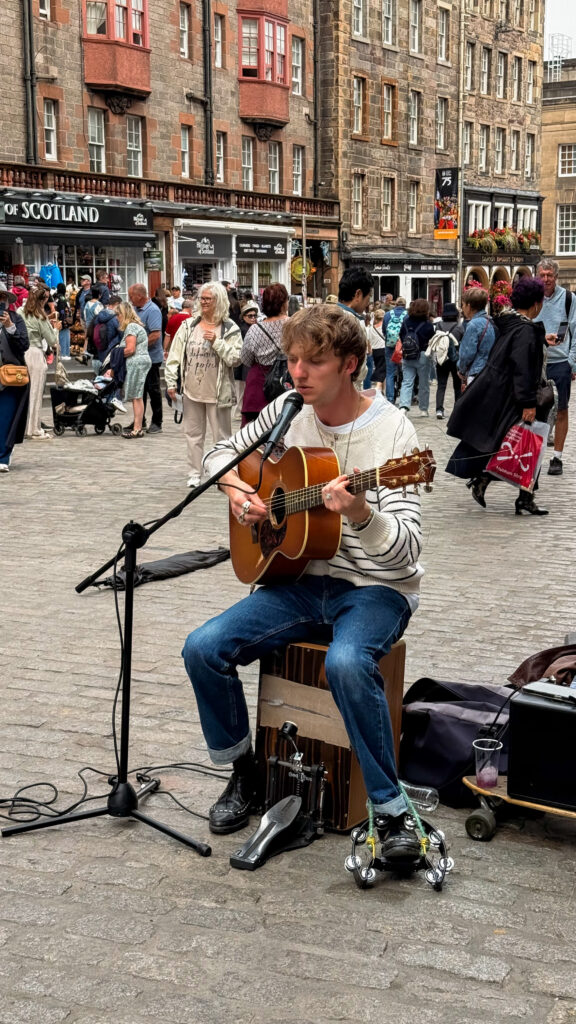
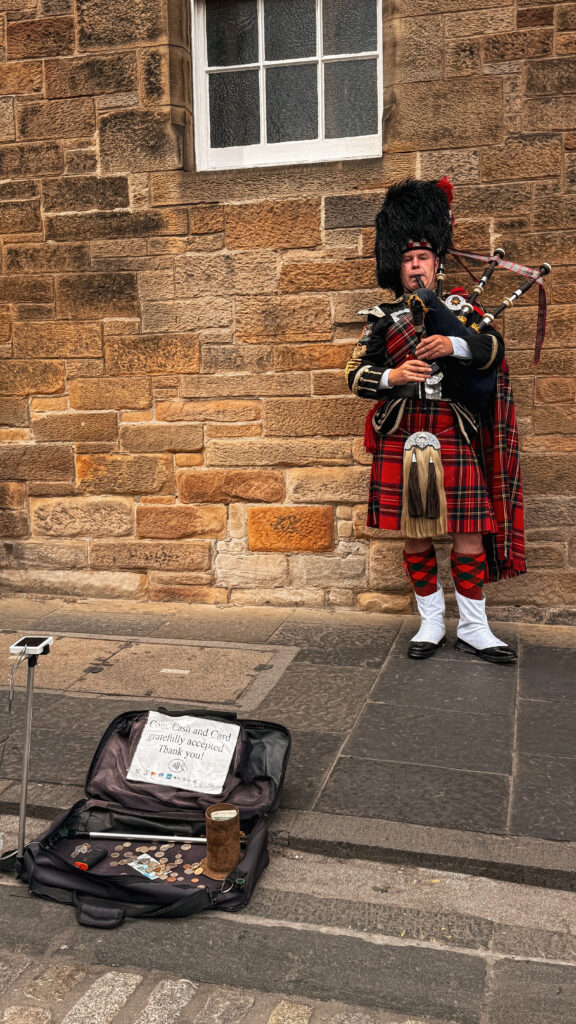
Tip: if you take one thing from this post, take this. Do the Royal Mile before nine.
The Milkman
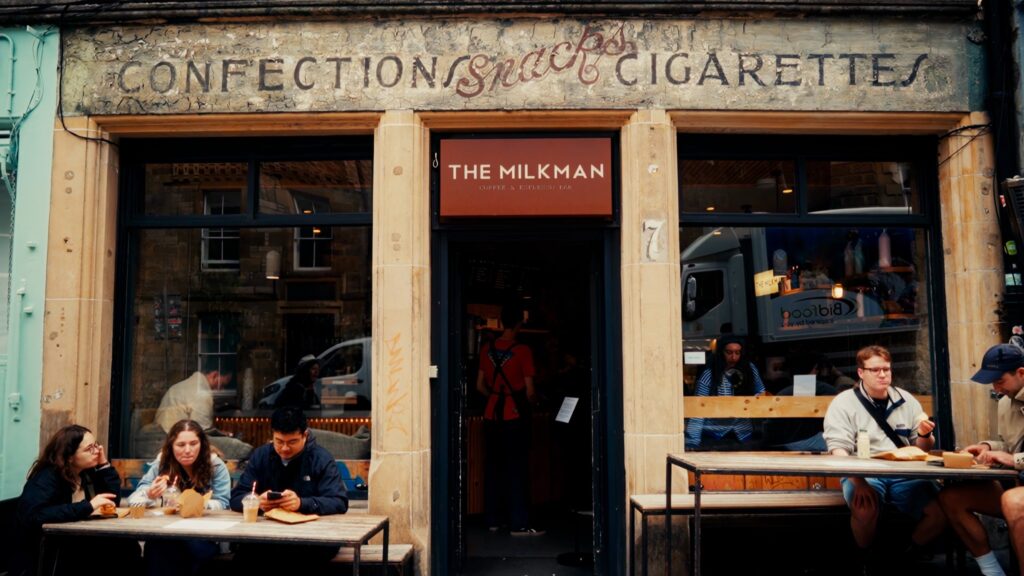
Coffee at The Milkman, 7 Cockburn Street. The building dates from 1859, and if you look at the hand-painted sign above the door you can still see it used to be a confectioner. The pastries are excellent and we went back a second time, which is the only review that matters. It’s small, so there’s often a short wait, but it moves fast.
Victoria Street
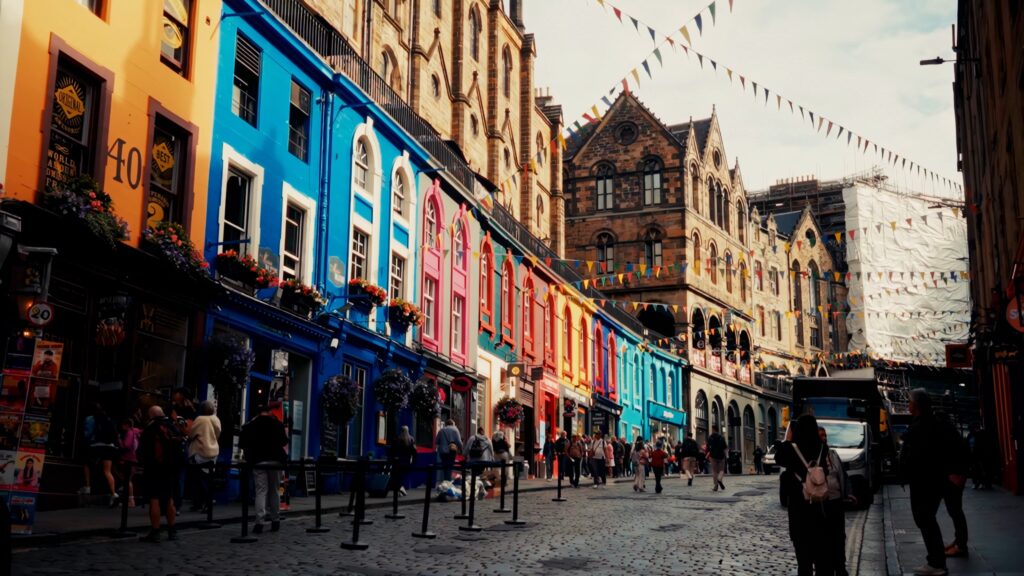
Victoria Street is the most photographed street in Edinburgh and it isn’t close. Built in the 1830s, curved, painted in reds and greens and blues, stacked up the hill towards George IV Bridge.
A lot of people come here because it’s supposed to have inspired Diagon Alley. J.K. Rowling has never confirmed that, but enough people believe it that by late morning in August, you can’t stand still on it. If you want a photo without twenty strangers in it, you need to be there before nine, same as the Royal Mile.
Greyfriars Bobby
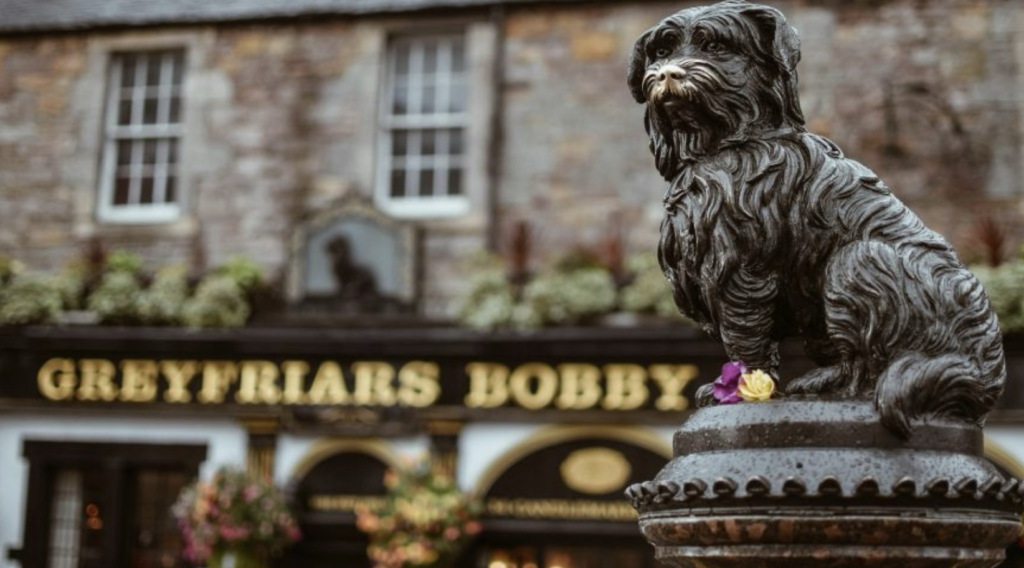
Two minutes’ walk away, there’s a small bronze statue of a Skye terrier with a nose rubbed gold by decades of hands.
The story is that Bobby belonged to a man called John Gray, and when Gray died in 1858 Bobby refused to leave his grave in Greyfriars Kirkyard for the next fourteen years. He died in 1872, and the statue went up within a year.
Here’s the part the plaque leaves out. The historian Jan Bondeson went through the surviving photographs and found two different dogs: the 1867 image shows a scruffy old mongrel with cataracts, the later ones a young Skye terrier with clear eyes. The kirkyard caretaker, James Brown, was the one feeding the strays, and he would tell tourists the story and then point them towards a restaurant just outside the gate. That restaurant’s owner didn’t buy the place until 1862, four years after Gray died, which rather undermines the idea that Bobby was returning to somewhere he had known with his master.
Princes Street Gardens
You stumble into one of the best views of the castle in the city, and it costs nothing.
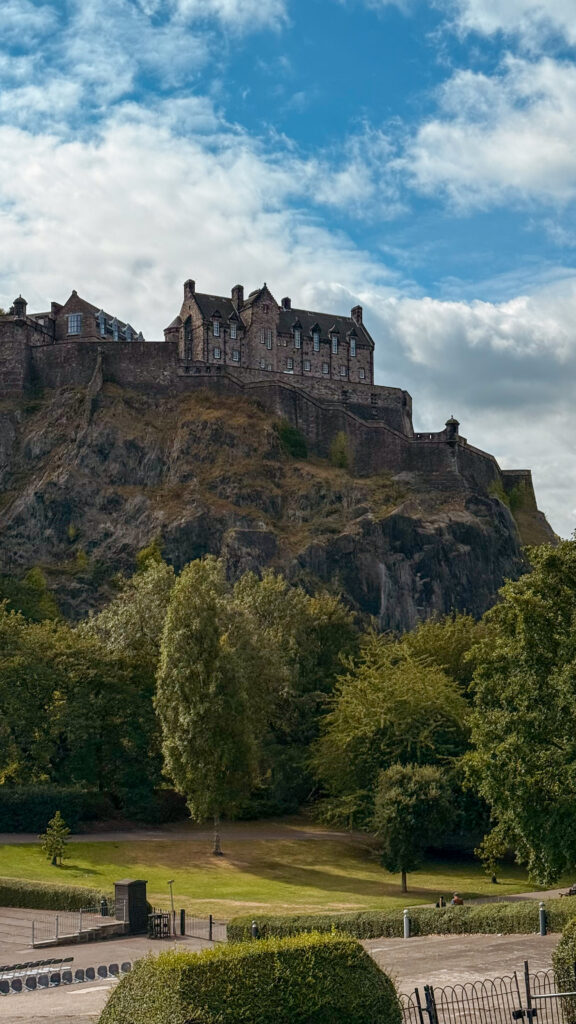
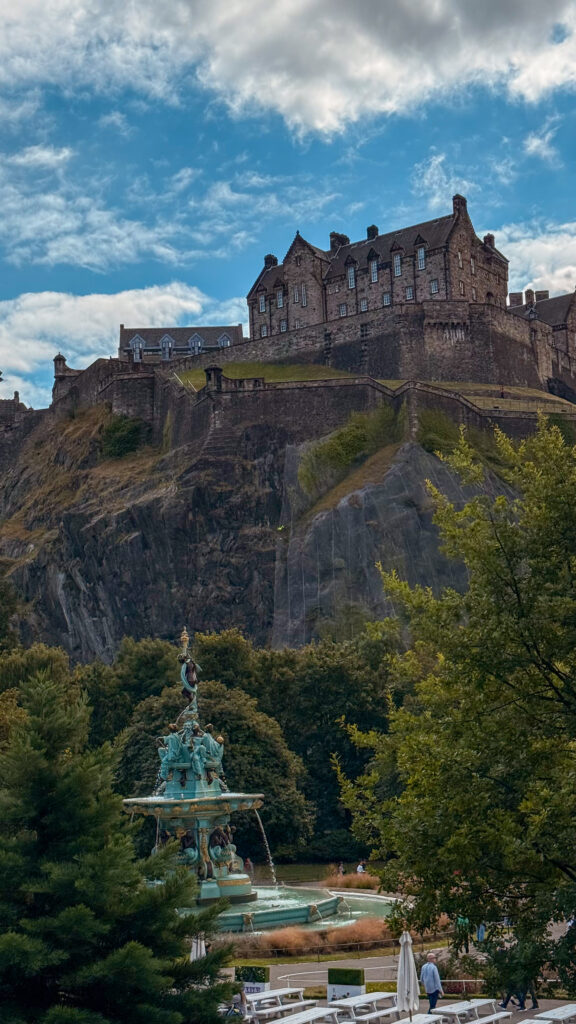
None of this was here for most of Edinburgh’s history. In 1460 James III had the whole valley deliberately flooded to defend the castle from the north. Over the following three centuries the Old Town used the water as its dumping ground, and by the end it was less a loch than an open sewer. They drained it between 1813 and 1820 and planted gardens.
Now everyone eats lunch on it. There are usually free performances during the festivals, and it’s one of the few central spots where you can sit down without buying anything.
Princes Street
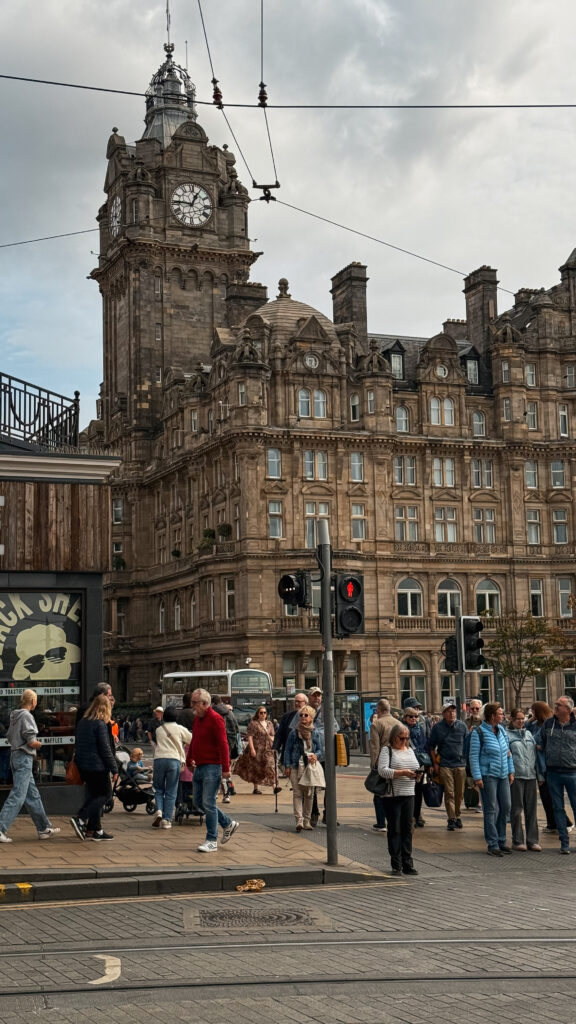
Princes Street is a mile of high street shops that could be anywhere in Britain. Boots, H&M, Marks & Spencer.
And then you look left. The street only has buildings on the north side, because when the New Town was laid out from about 1770 to James Craig’s plan, parliament ordered that nothing could ever be built on the south. The view was protected by law before anyone thought of it as a view.
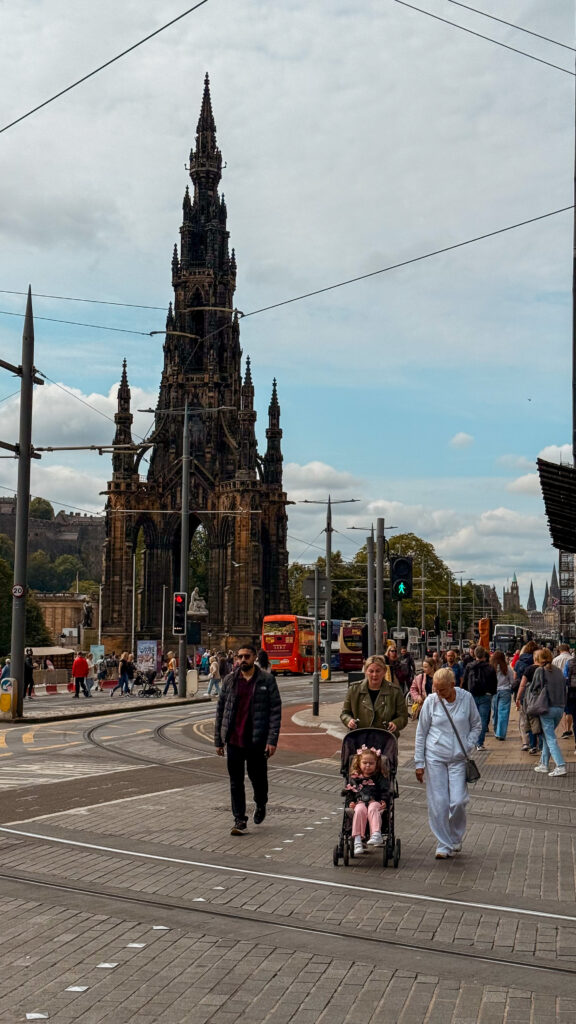
The Scott Monument is the other thing worth stopping for. Two hundred feet of blackened Victorian Gothic, 287 steps to the top, built between 1841 and 1844 to a design by George Meikle Kemp, a self-taught joiner who entered the competition under a false name and didn’t live to see it finished. Most guides call it the largest monument to a writer in the world. It’s the second — the José Martí monument in Havana is bigger.
Dean Village
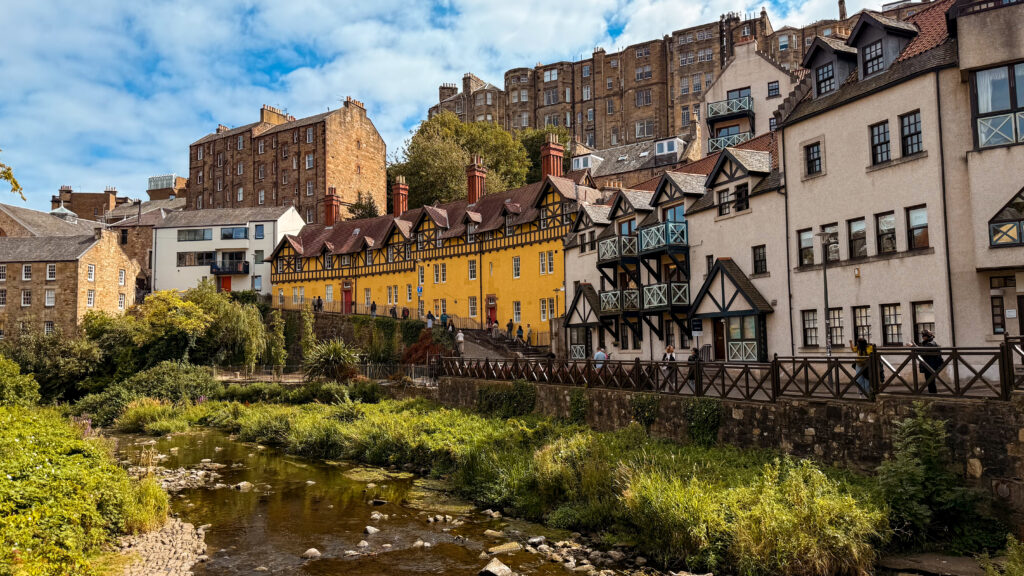
This was my favourite part of the whole trip, and it’s a fifteen-minute walk from Princes Street.
Dean Village sits down in the valley of the Water of Leith, and there were mills here for eight hundred years, grinding grain powered by the river. When the industry left, the village simply stayed. It’s residential now, so keep your voice down and don’t photograph through people’s windows.
The contrast with the city centre is enormous. It’s quiet in a way that feels like a different place entirely, as though it doesn’t belong to the same city. We walked slowly, sat by the water, and didn’t try to do anything.
If you have energy, the Water of Leith Walkway continues towards Stockbridge and it’s flat the whole way.
Tip: this is the answer to the August problem. The quiet places haven’t gone anywhere. They’re fifteen minutes away and the crowds don’t reach them.
The Royal Edinburgh Military Tattoo
This is the reason we came in August at all, and it only exists in August.
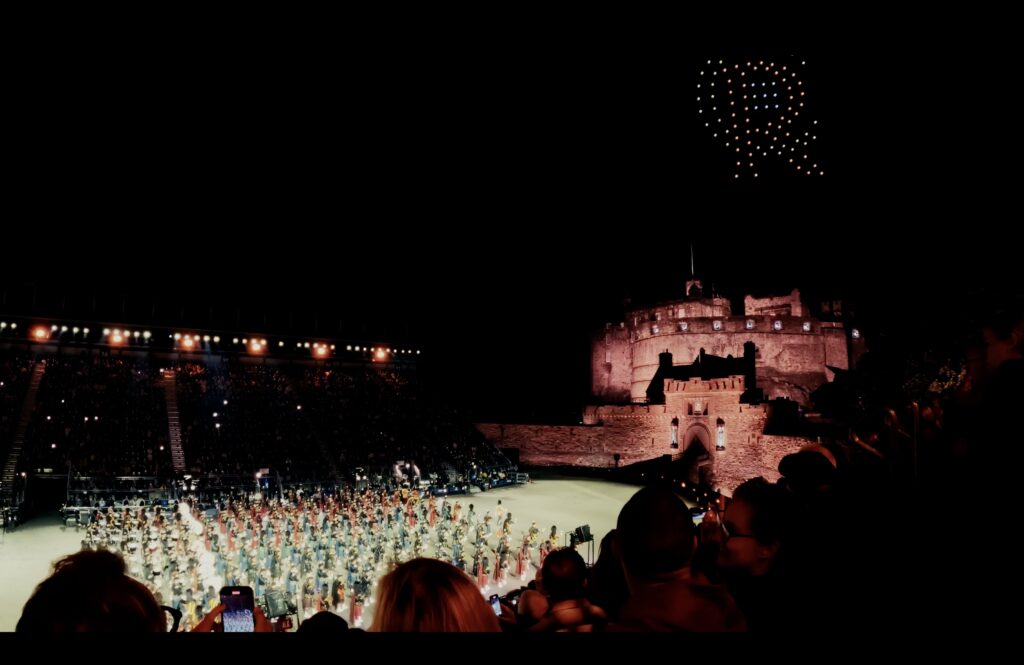
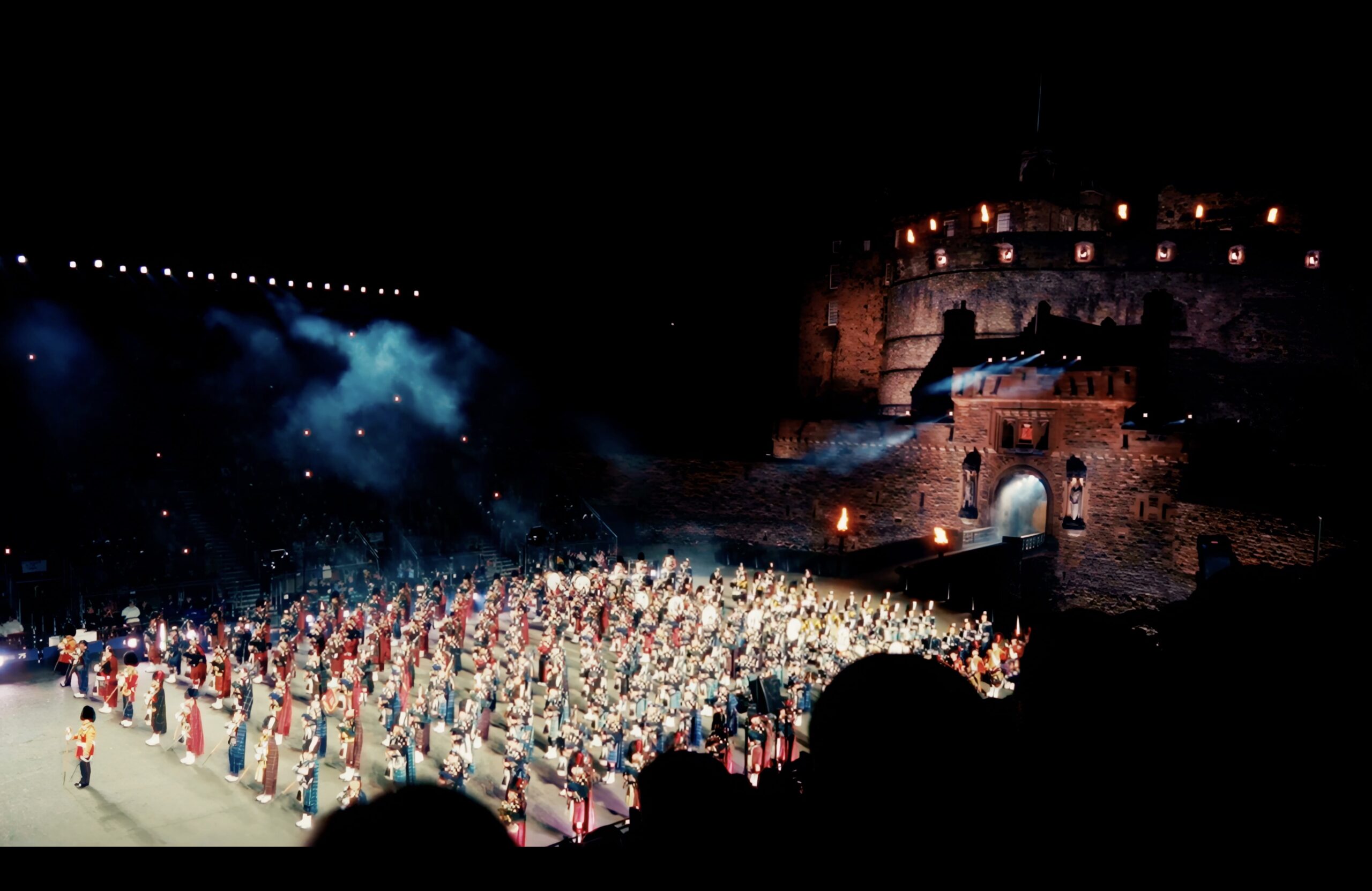
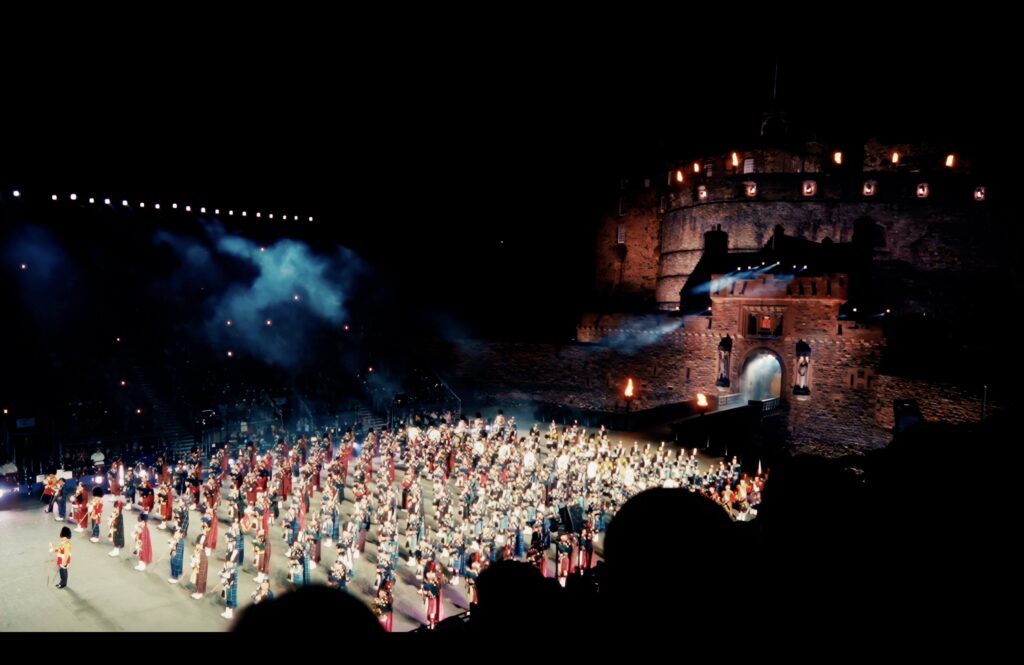
The Royal Edinburgh Military Tattoo runs for about three weeks each year on the Edinburgh Castle Esplanade, and in 2026 that’s 7 to 29 August. The grandstand holds 8,825 people. Around 217,000 come every year. It has been running since 1950 and they have never cancelled a single performance, which in a country with this weather is a genuinely absurd statistic.
The word has nothing to do with ink. It comes from the Dutch phrase doe den tap toe, meaning turn off the taps, and three hundred years ago, it was the drumbeat that went through a garrison town at night to tell the innkeepers to stop serving and the soldiers to go back to barracks. A drumbeat that used to mean go home now sells out a castle esplanade every night for three weeks.
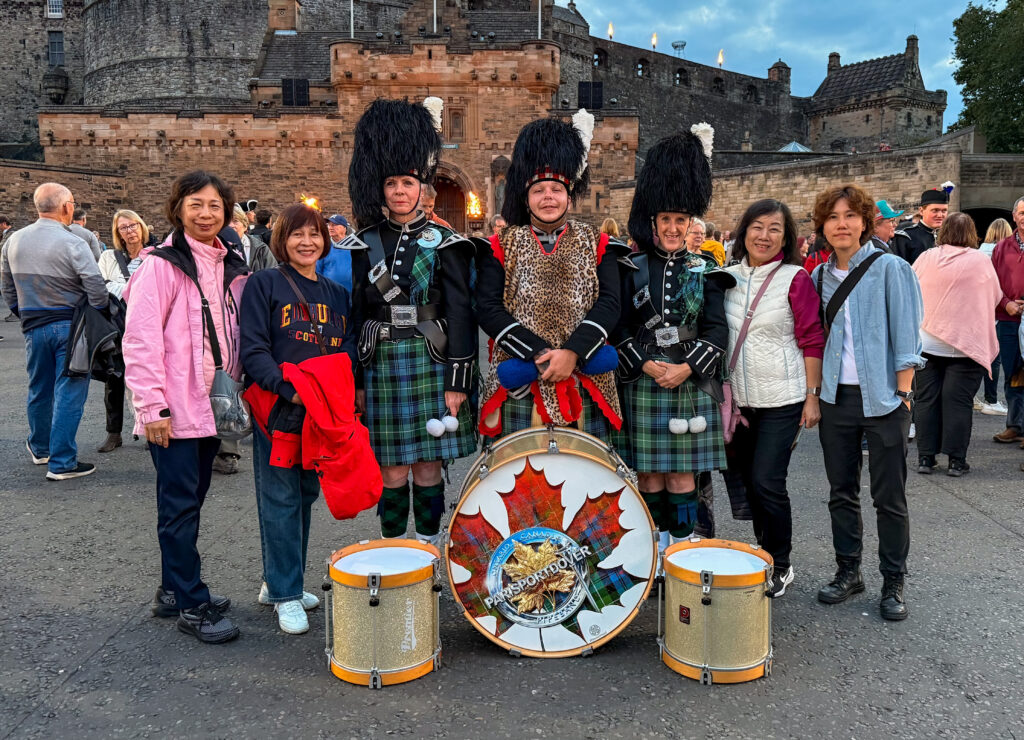
The thing nobody told me: before the show starts, they open the arena and let the audience walk out onto the floor. The performers are already down there getting ready and they’ll stop and take photos with you. My mum has a picture with a piper taken twenty minutes before the biggest night of his year, and he could not have been more relaxed about it.
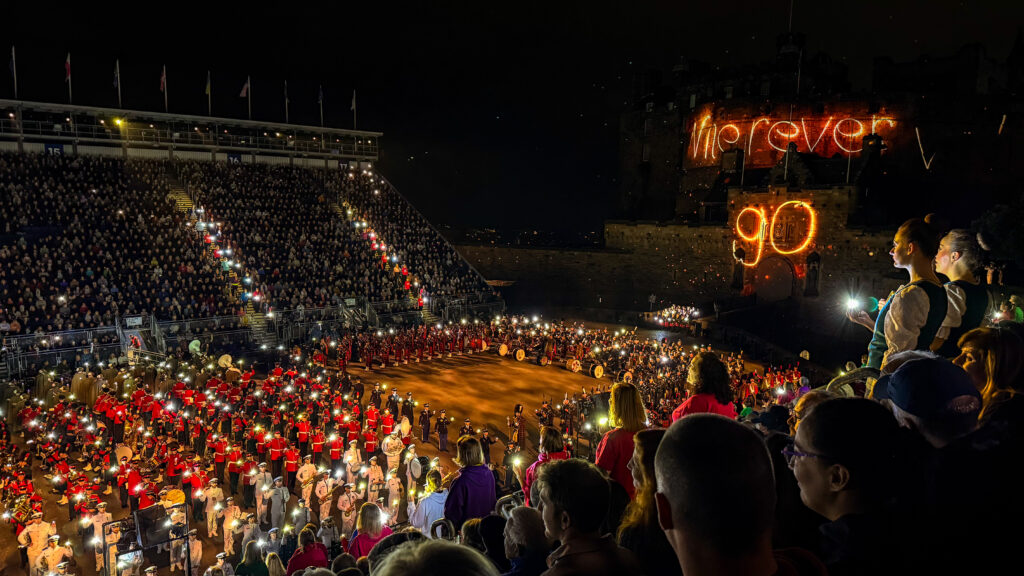
Then the massed pipes and drums start. I don’t have a tidy explanation for what bagpipes do to me. There’s something sad in the sound even when a thousand of them are playing at once under fireworks, and I’m moved every single time without being able to say why.
Practical notes for the Tattoo
This is the stuff I wish I had known, and it’s badly covered elsewhere.
- Show times: Monday to Friday at 9.30pm. Saturdays have two shows, at 6.15pm and 9.30pm. It runs about 90 minutes.
- Which show: the late one gets the darkness and the castle projections. The early Saturday show is easier if you’re with older family or children, and you see the costumes and formations much more clearly.
- No umbrellas. They’re banned. It’s open-air with no cover, so bring a waterproof with a hood and dress warmer than you think.
- No tripods or monopods, and no flash. If you’re filming, you’re handheld.
- Bags larger than A3 size aren’t allowed.
- Getting up there: the esplanade is at the top of the Royal Mile, so it’s uphill however you approach it. Leave far more time than you think, because 8,825 people are walking up the same hill as you.
- Sunset in late August is around 8.30pm, so a 9.30pm show starts in darkness. It gets cold on that rock.
- Getting down afterwards takes a while. Nobody’s in a hurry and the streets are narrow.
Book as early as you can. Tickets go on sale months ahead and the good seats go first.
Day 2: Holyrood, Calton Hill and Edinburgh Castle
Palace of Holyroodhouse
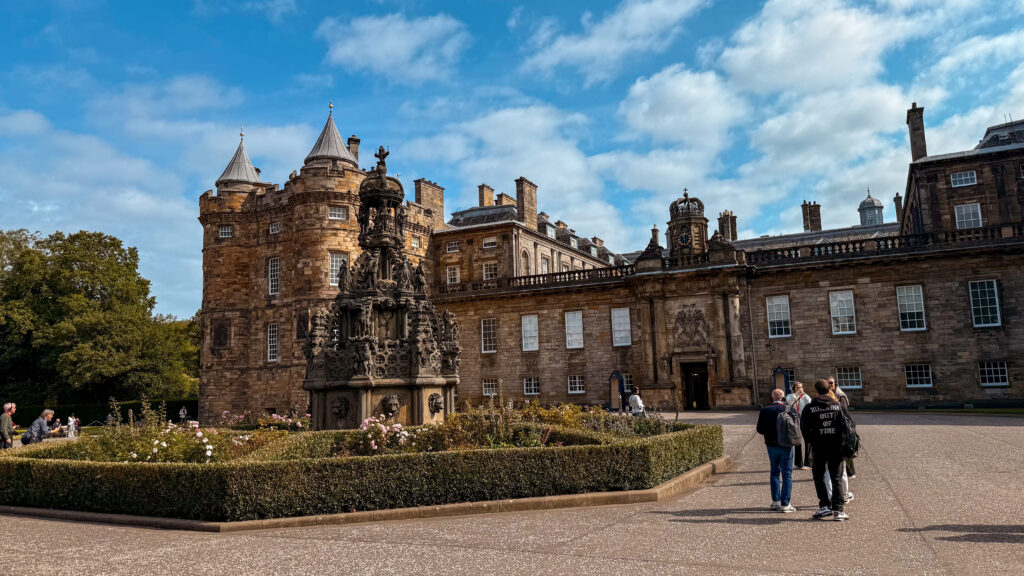
The other end of the Royal Mile. Where the castle was built for defence, Holyrood was built for living in, and it’s still the King’s official residence in Scotland. Charles III stays here for a week every summer.
It started as an abbey in 1128, founded by David I, and the ruins are still standing in the grounds. The palace itself went up between 1501 and 1505 under James IV, and most of what you see now was rebuilt in the 1670s.
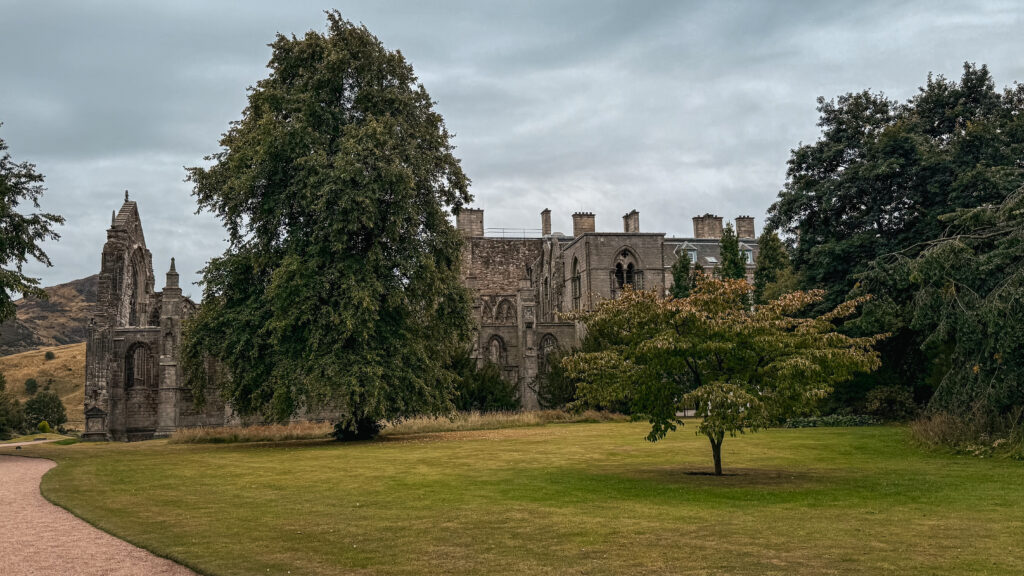
Mary, Queen of Scots lived here from her return to Scotland in 1561 until she was forced to abdicate in 1567. On 9 March 1566, a group of men including her own husband dragged her private secretary David Rizzio out of supper and stabbed him fifty-seven times in the room next door. She was six months pregnant and in the building.
The Great Gallery holds 96 portraits of Scottish kings, all painted by one Dutch artist, Jacob de Wet, between 1684 and 1686. He was commissioned to produce 110 monarchs going back to the legendary Fergus I, which means a good number of the faces on those walls belong to men who never existed.
p.s you can’t photograph inside
Calton Hill
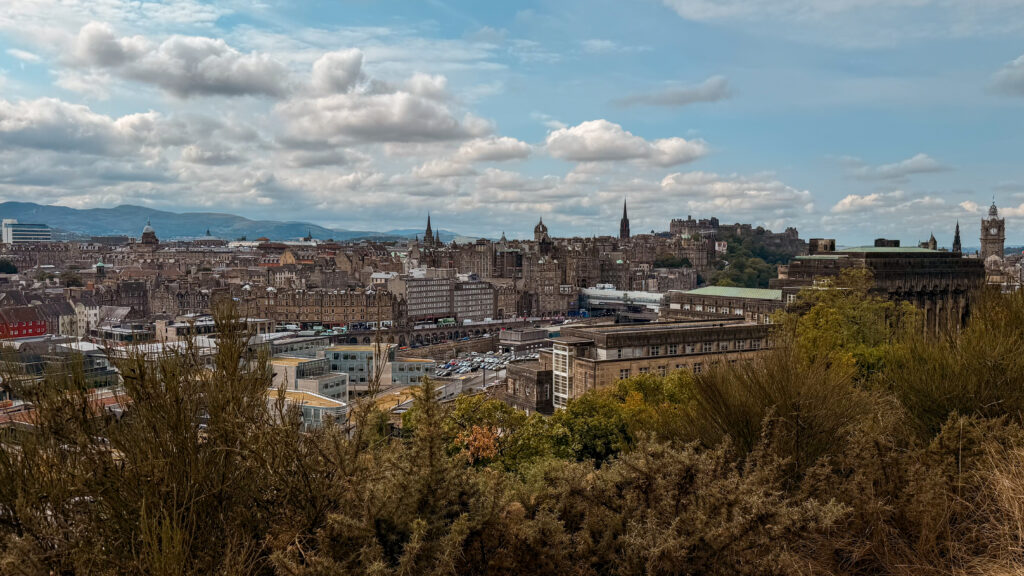
Only 10-15 minutes up, on a made path, and genuinely easy. That mattered a lot with the group I had.
At the top of Calton Hill there’s a row of twelve enormous Greek columns holding up nothing. That’s the National Monument, started in 1826 as a memorial to the Scots who died in the Napoleonic Wars and abandoned three years later when the money ran out. Locals called it Edinburgh’s Disgrace for the better part of two centuries. It’s now the most photographed thing on the hill.
When we got to the top there was somebody up there playing the pipes. No stage, no tickets, nobody paying him. Two nights after the Tattoo, that got me more than the fireworks did.
You can see the whole city in a single turn from up here: the castle, the Old Town ridge, Arthur’s Seat, and the Firth of Forth behind it all. It’s free and it’s open all the time.
Edinburgh Castle
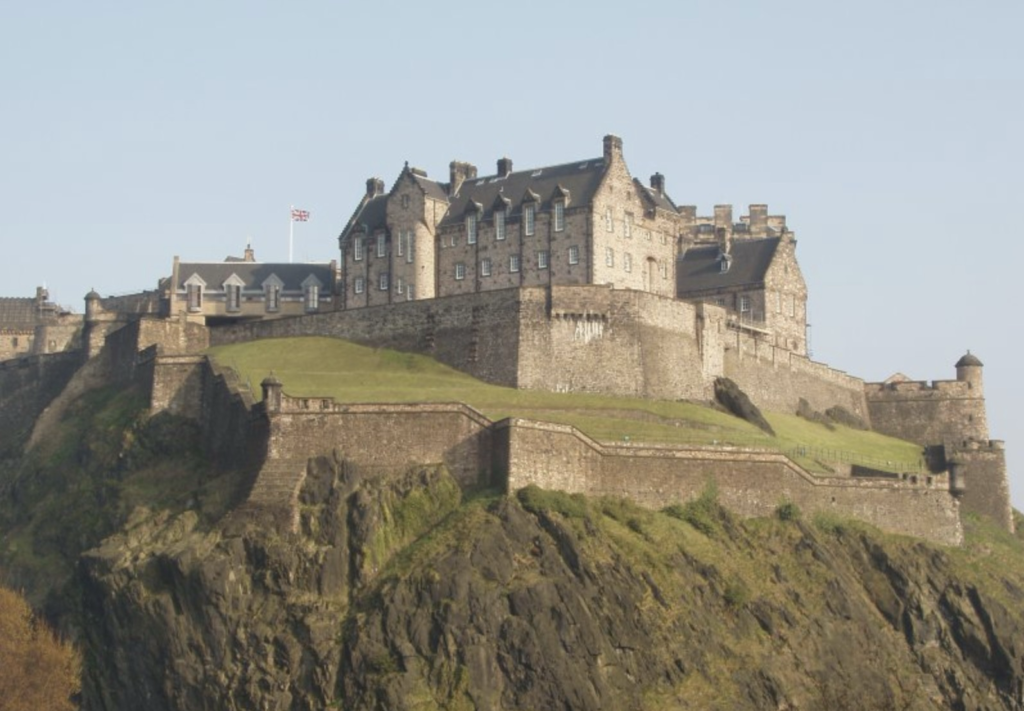
We had stood at the bottom of this rock two nights earlier watching a thousand people play bagpipes on it. Walking in through the gates in daylight is a strange and very good feeling, and I’d recommend doing it in that order if you can.
Edinburgh Castle sits on an extinct volcano that has been occupied since at least the Iron Age, which makes it the longest continuously occupied site in Scotland. Research in 2014 counted 26 sieges in its history, more than anywhere else in Britain. It took just over two million visitors in 2025.
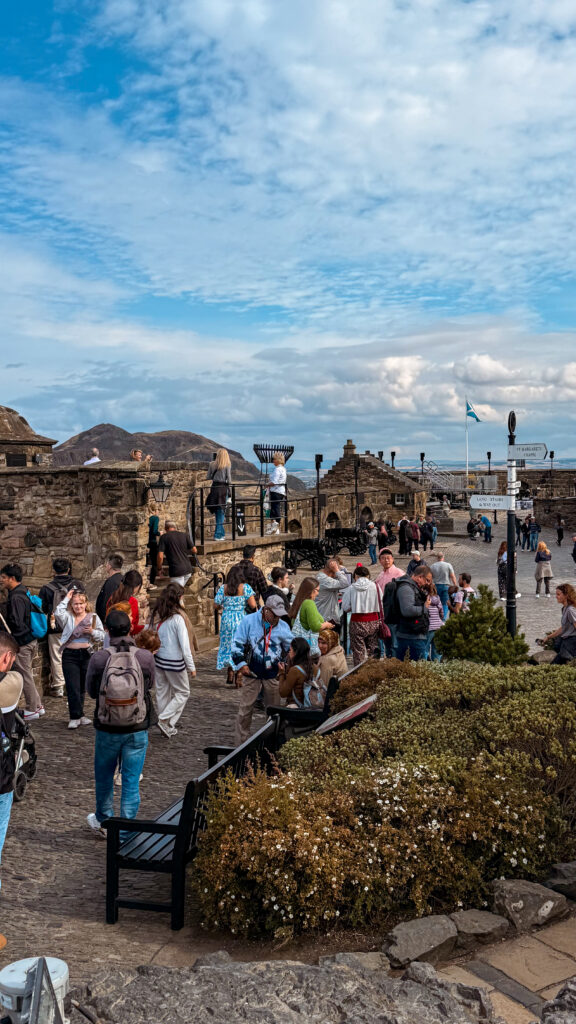
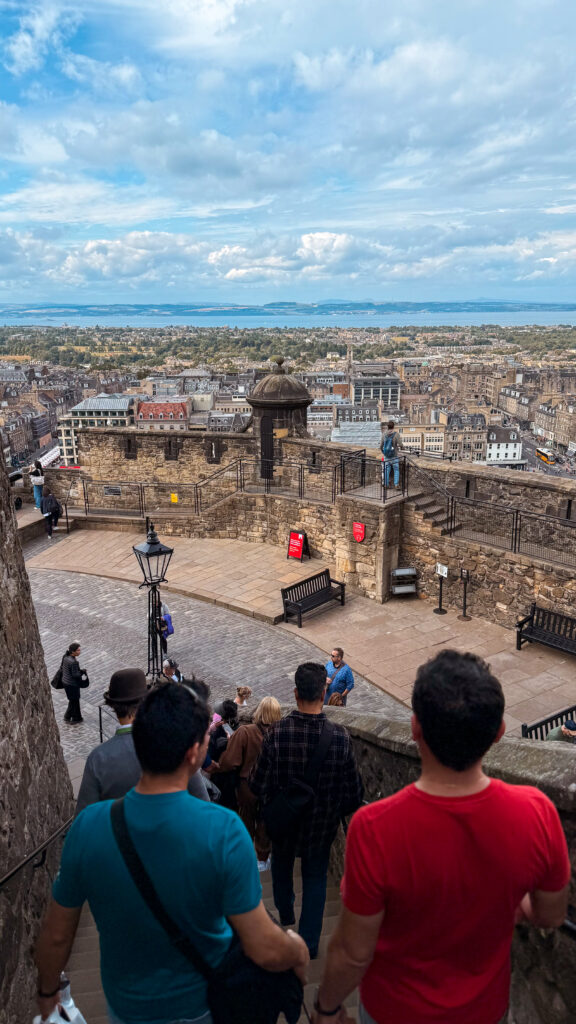
What’s actually worth your time inside:
The Prisons of War. The vaults under the Great Hall held prisoners of war for about sixty years. The first arrivals were French privateers in 1758, and after them came men from America, Spain, the Netherlands, Ireland, Italy, Denmark and Poland, most of them sailors. The youngest was six years old, captured at Trafalgar in 1805. In 1811, forty-nine of them escaped through a hole in the defences that you can still see, and every one was recaptured. An American prisoner scratched an early Stars and Stripes into one of the doors and it’s still there. This was the part I’d go back for.
The Honours of Scotland. The oldest crown jewels in Britain: a sceptre given by the Pope in 1494, a sword of state from another Pope in 1507, and a crown made in 1540. They were last used to crown Charles II at Scone in 1651, and after the Union with England in 1707 they were locked in a chest and forgotten for 111 years. On 4 February 1818, after Walter Scott talked the Prince Regent into authorising a search, someone opened that chest and everything was still inside.
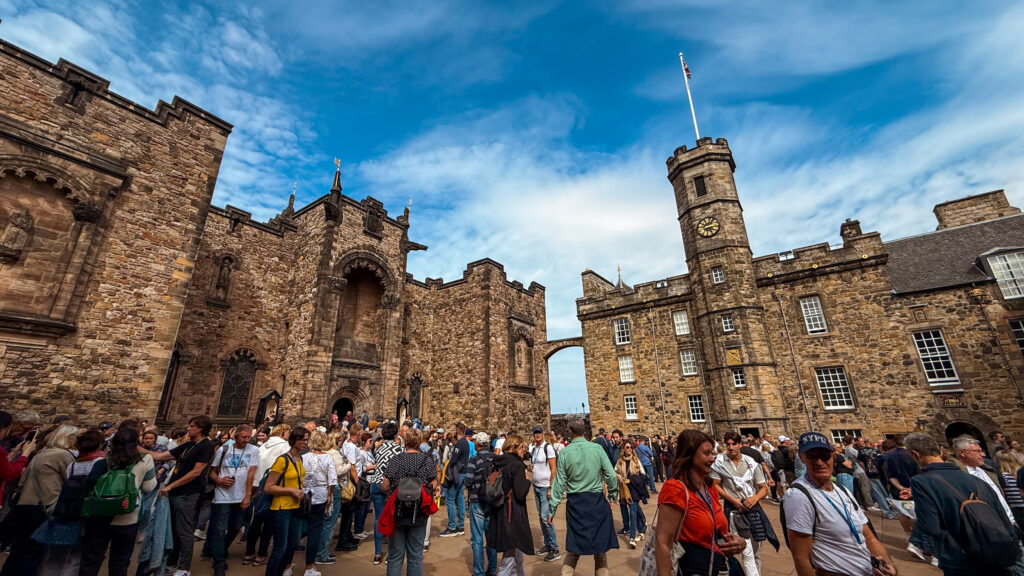
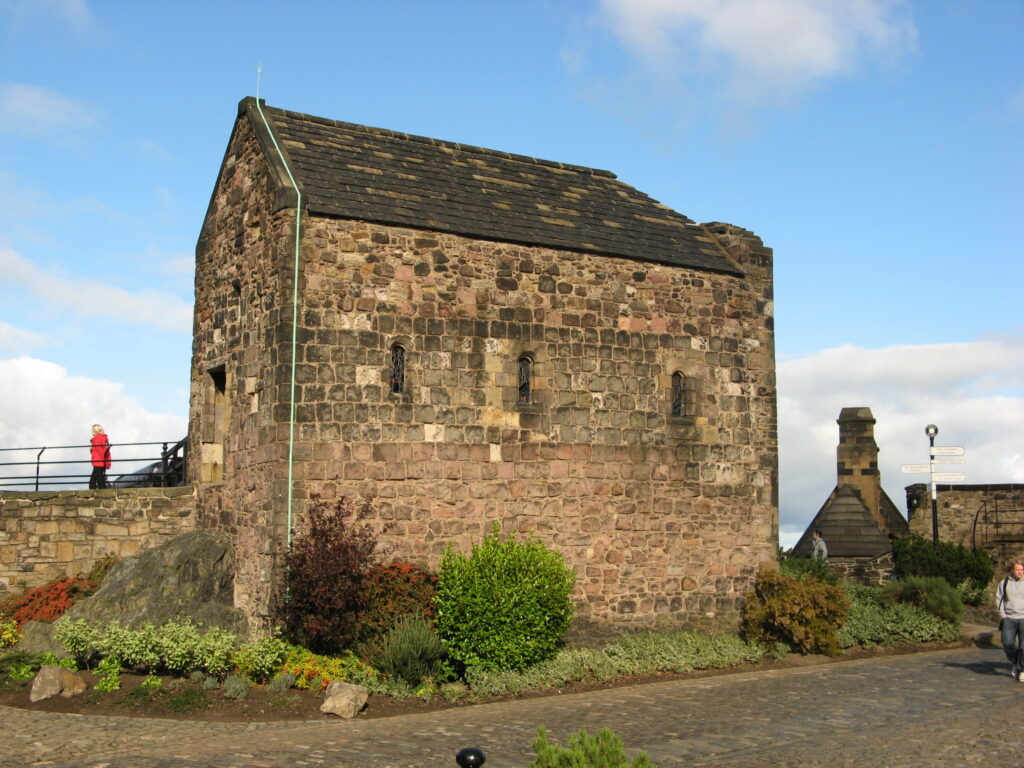
St Margaret’s Chapel, built in the 1130s and the oldest building in Edinburgh. It’s tiny and easy to walk straight past.
The Vennel Viewpoint
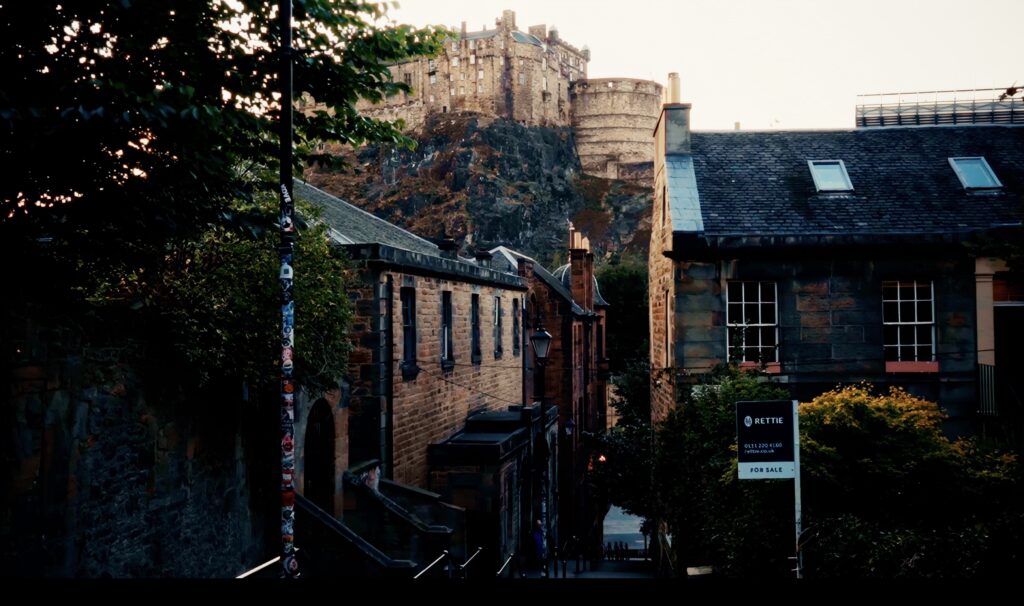
The Vennel is a set of steps running between two buildings just west of the castle, off Lauriston Place. You climb halfway, turn around, and the castle is framed perfectly between two stone walls.
The wall on the left is part of the Flodden Wall, built after Scotland’s catastrophic defeat at Flodden in 1513, when Edinburgh genuinely expected an English army to arrive next. Nobody who built it was thinking about the view.
It’s free, it takes ten minutes, and two nights earlier that same rock had nearly nine thousand people on it.
Visiting Edinburgh with older parents
Nobody writes about this and it changed how we planned every day, so here’s what I learned.
Edinburgh is a hill city, and the Old Town is the steepest part of it. The Royal Mile drops continuously from the castle to Holyrood, and the closes running off it are steps, not slopes. Walking down the Mile is easy. Walking up it at the end of a long day is not. Plan your route to end downhill.
Calton Hill instead of Arthur’s Seat. Every guide recommends Arthur’s Seat, and it’s a genuine hill walk with rough ground near the top. Calton Hill takes about ten minutes on a made path and gives you a view of the entire city, including Arthur’s Seat itself. If anyone in your group is unsure on their feet, this is the swap to make.
Princes Street Gardens is the rest stop. Central, free, plenty of benches, and a view of the castle while you sit. We used it twice.
Consider the early Saturday Tattoo show. 6.15pm rather than 9.30pm means no late night, no cold rock at eleven, and a much easier walk back.
Build in an afternoon gap. Staying in the Old Town meant we could go back to the room for an hour and come out again. In August that hour is worth more than another attraction.
What I’d do differently
I’d book the Tattoo for a Saturday early show. The 9.30pm performance is more dramatic and I don’t regret it. But finishing at eleven on an exposed castle esplanade with three people in their sixties was a lot, and the 6.15pm show gets you a clearer view of the costumes and formations anyway.
I’d give Dean Village a whole morning. We had about ninety minutes and it was the best part of the trip. I’d walk the Water of Leith through to Stockbridge next time and treat the Old Town as the afternoon.
I’d see one Fringe show. We saw none. It was the right call for the pace we needed, but there are four thousand of them at the Fringe, many are an hour long and cost very little, and I think one would have added something. Next time I’d book an afternoon show near where we were staying and treat it as the sit-down.
I’d stay three nights, not two. Two full days works, and this itinerary is proof. But August is the month Edinburgh does something it doesn’t do the rest of the year, and we spent a good part of ours walking between things.
Everyone who told me to come in a different month was right about the crowds. They were right about the prices too. Come in October and you’ll see the same castle, the same closes, the same water running through Dean Village, and you’ll have most of it to yourself.
Useful links
- The Royal Edinburgh Military Tattoo — tickets, dates and venue rules
- Edinburgh Castle — tickets and opening times
- Palace of Holyroodhouse — tickets and audio guide languages
- Edinburgh Festival Fringe — programme and tickets
- Water of Leith Conservation Trust — walkway routes and closures
- Perth Museum — where the Stone of Destiny is now
- LNER — London to Edinburgh trains
- Lumo — cheaper London to Edinburgh trains
- Edinburgh Airport bus links — Airlink 100
- Edinburgh Trams — airport to city centre
You might also like

Explore more: UK · Europe · Taiwan · USA · All posts →