


We booked Faro because it was the cheapest flight out of a grey London week. That’s the whole reason. I’d never thought of it as a destination — like most people, I knew Faro as the airport you fly into before driving somewhere else in the Algarve. We almost did the same.
Then half the trip fell apart before we’d even landed. The boat tour, the cave, the things we’d booked — the sea kept turning them off one by one, and our guide called to cancel more than once. And somehow Faro in November, with most of its plans in pieces, became one of my favourite trips we’ve ever taken.
This is how I’d spend 3 days in Faro, built from the five days we actually had (the first and last were travel days, so you really get three full ones on the ground). It’s a slow itinerary — old stone, salt marsh, a day trip or two — for the kind of traveller who’d rather sit with a place than tick it off.
Quick trip info
- Duration: 3 full days (we did it as a 5-day trip with two travel days)
- Season: November — mild, quiet, very few crowds
- Best for: Slow travellers, first-timers to the Algarve, off-season trips, photographers
- Getting there: Fly into Faro Airport (FAO); the old town is a 15-minute taxi or bus ride
What’s in this guide
- Getting there & around
- Where to stay in Faro
- Day 1 — Faro’s Old Town & the Ria Formosa
- Day 2 — A day trip to Tavira
- Day 3 — The Benagil cave & a slow last morning
- Is 3 days in Faro enough?
- Where to eat in Faro
- Know before you go
- What I’d do differently
Getting there & around
Faro Airport sits about 7km from the old town. A taxi takes 15 minutes; the local bus runs the same route for a few euros. Once you’re in the centre, you barely need anything else — Faro is small and almost entirely walkable, which is one of the quiet joys of basing yourself here.
For the day trips, the train does the work. Faro and Tavira sit on the same regional line, about 35–40 minutes apart, and tickets are cheap — check times on CP, the Portuguese railway. Benagil is the exception: it’s an hour or more west, and the cave itself is only reachable from the water, so a tour with pickup is the easiest way (more on that below).
Where to stay in Faro
Stay in or near the Cidade Velha (old town) if you can. Being able to walk out into those cobbled streets at dawn or after dinner — when the day-trippers have gone and it’s just you and the orange trees — is the best thing about staying in Faro rather than treating it as a base. Off-season, you’ll find rooms going for far less than the summer rates.
We stayed at Roots Hotel Apartments (R. Francisco Barreto 32–34), a short walk from the old town, and would happily recommend it.
Day 1 — Faro’s Old Town & the Ria Formosa
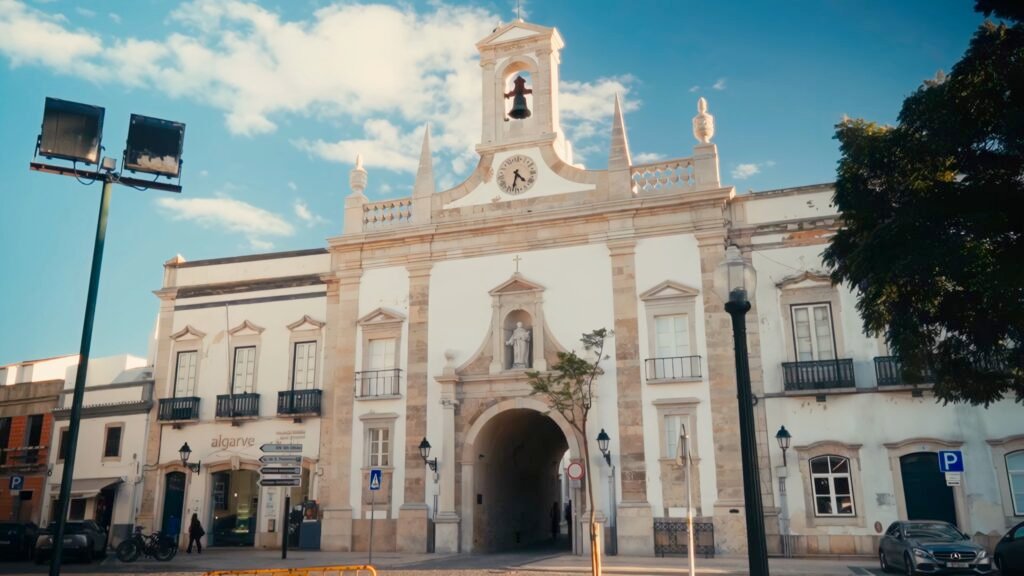
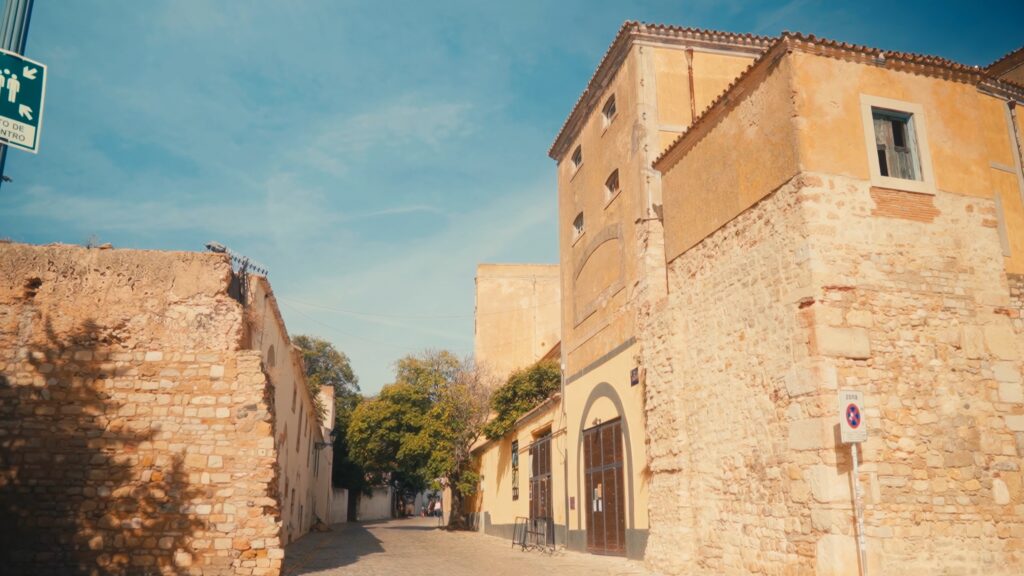
Faro’s Cidade Velha is a small walled quarter you enter through the Arco da Vila, a neoclassical gateway built over what was once a Moorish arch. Inside, the streets are cobbled and quiet, wrapped in old walls, with storks nesting on the rooftops. Off-season it empties out almost completely, and honestly that’s when I love a place most — you get the whole thing to yourself.
Most of our mornings here started the same way: a slow walk through these streets to a local café, a coffee and a custard tart, and nowhere we had to be. Café Natali became our regular — a proper local spot with some of the best pastéis de nata we had all trip. After years of rushing around London, that rhythm alone was worth it, so build your first day around it rather than racing the clock.
Sé de Faro (the Cathedral)
In the old town’s orange-tree square stands the Cathedral of Faro. After Afonso III took the city from the Moors in 1249, work began around 1251 on a Christian cathedral — built directly on the site of the city’s main mosque, which itself sat on the remains of a Roman temple. It’s been knocked about over the centuries: sacked and burned by an English raiding fleet in 1596, then badly shaken by the great 1755 earthquake, and rebuilt each time. The result is a patchwork of Gothic, Renaissance and Baroque that, from the outside, looks almost plain. We nearly walked past it.
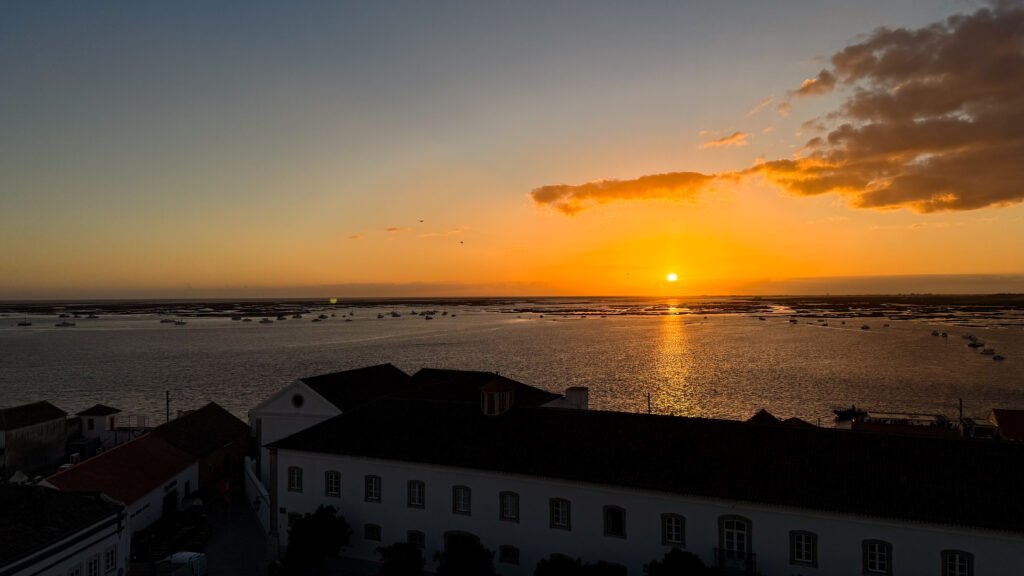
Go in, and go up. You can climb the bell tower, and we got there by luck just as the sun was dropping. The view opens over the rooftops and out across the Ria Formosa, and I’d put it up there as the best sunset spot in Faro. After a long day, sitting still up there while the light fell over the tiles — that eased everything.
Capela dos Ossos (the Chapel of Bones)
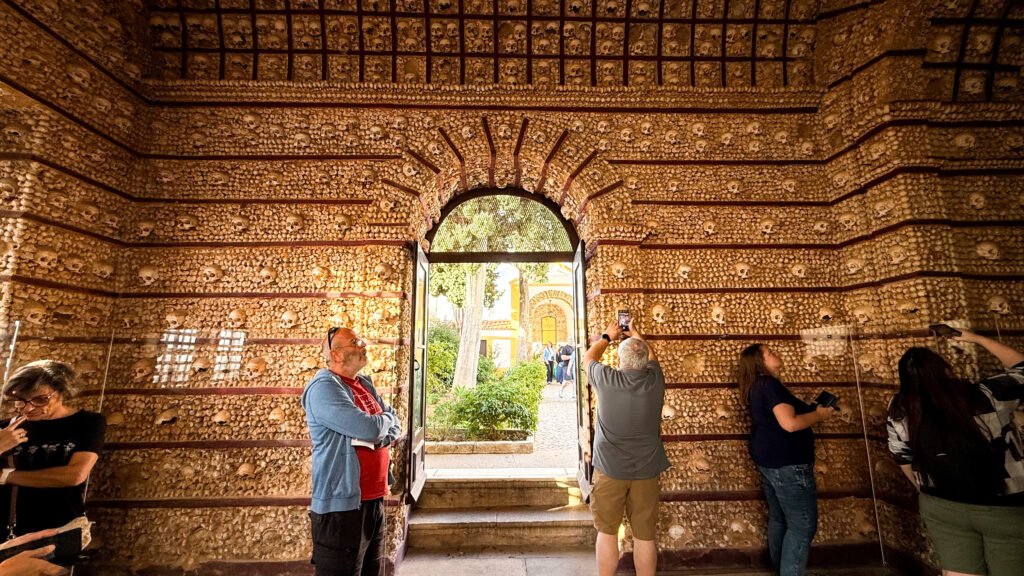
A short walk north of the walled old town, in the modern centre, the Capela dos Ossos sits behind the baroque Igreja do Carmo — so it’s worth pairing with, but not part of, the Cidade Velha. It’s a small chapel whose walls and ceiling are lined entirely with human bones and skulls. It was built in 1816 by the Carmelite friars, using the remains of more than a thousand monks exhumed from the church’s overcrowded cemetery — an estimated 1,245 skulls set into the mortar. Above the entrance is a memento mori inscription telling you to stop and consider that you, too, will end up in this state.
We came in straight after the morning we’d had out on the water, and that line landed differently than it might have on a calmer day. It’s strange and it’s still, and it makes you feel very small — in a good way, I think.
The Ludo Trail & the flamingos
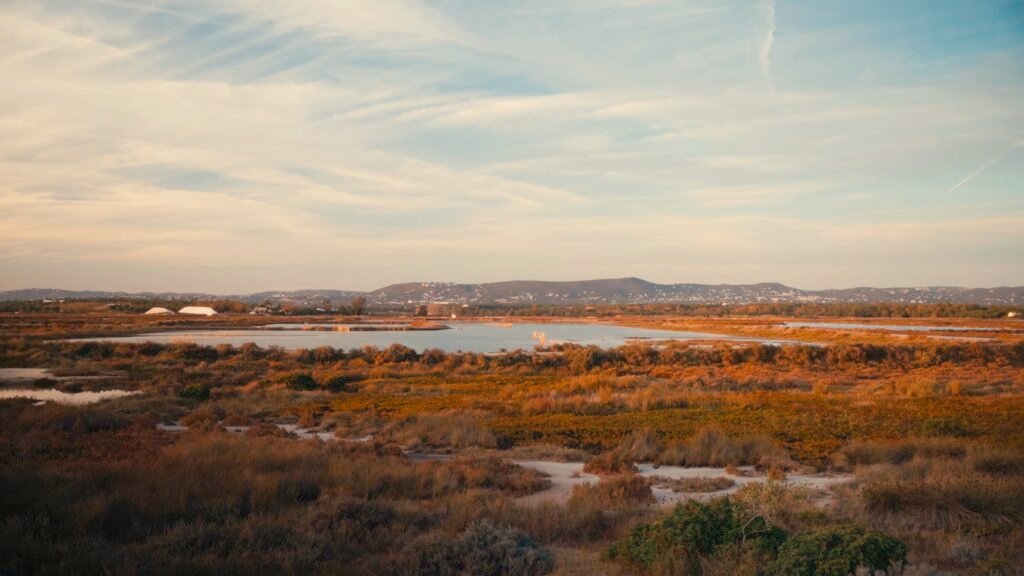
End the day in the Ria Formosa Natural Park, the lagoon system that runs along this stretch of coast. It’s a shifting maze of barrier islands, tidal flats and salt marsh — protected as a natural park since 1987, a Ramsar wetland of international importance, and named one of Portugal’s seven natural wonders. Over 1,500 species live here, from greater flamingos to one of the densest seahorse populations on earth, and the old salt pans you walk past still produce a huge share of Portugal’s sea salt, the same way the Romans first harvested it here two thousand years ago.
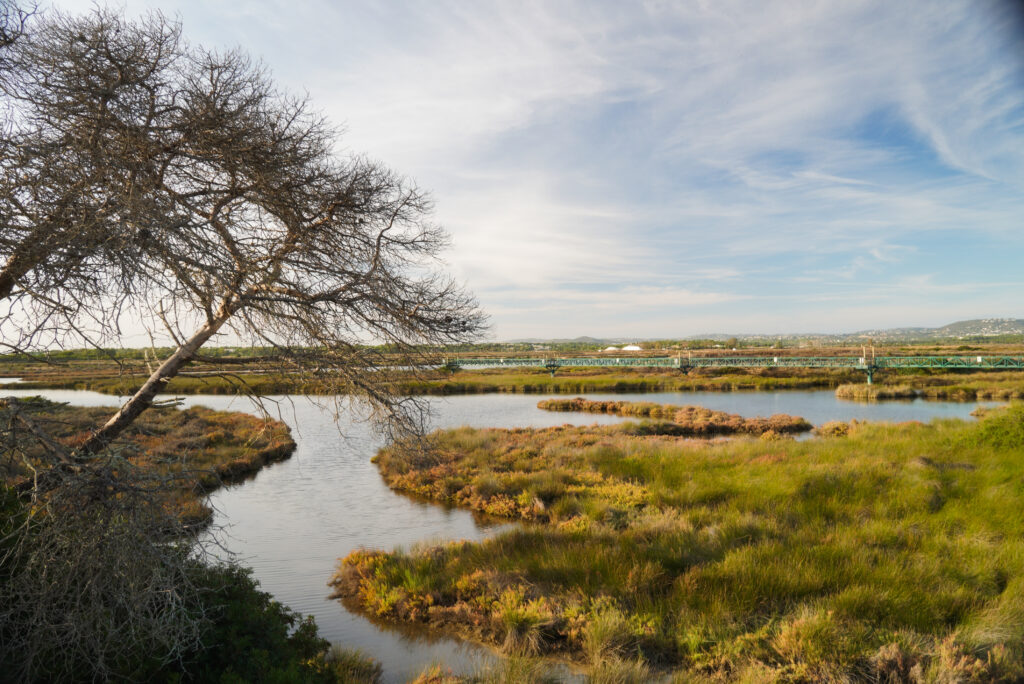
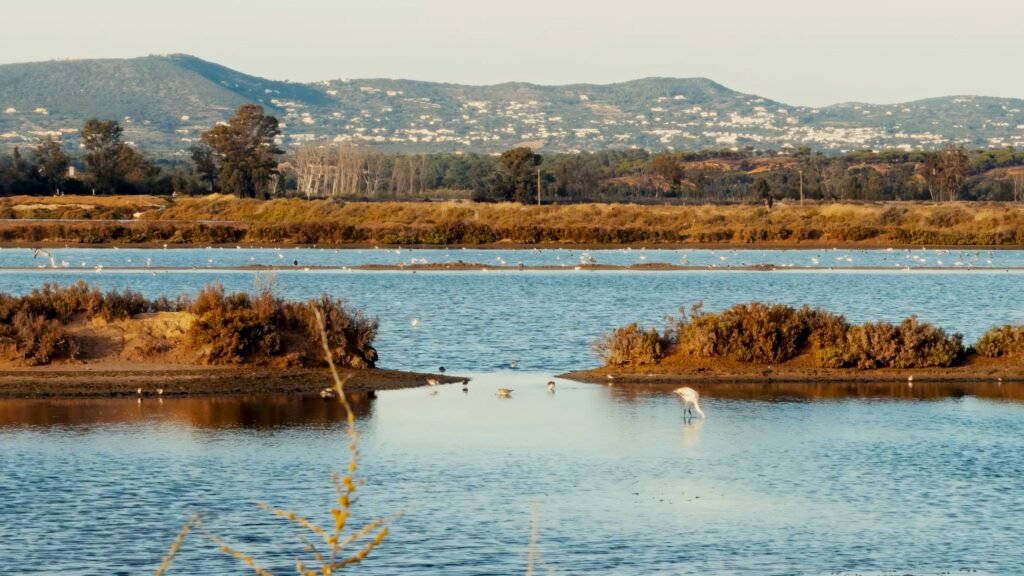
The Ludo Trail is the easiest way in — a flat, graded 7km loop at the western edge of the lagoon, right by the airport. The good news for a slow day: you don’t have to walk the whole thing. The path runs with the natural lagoon on one side and old salt pans on the other, so even a short stroll from the entrance puts you among the wildlife, and the salt pans on the right-hand fork are the flamingos’ favourite feeding spot.
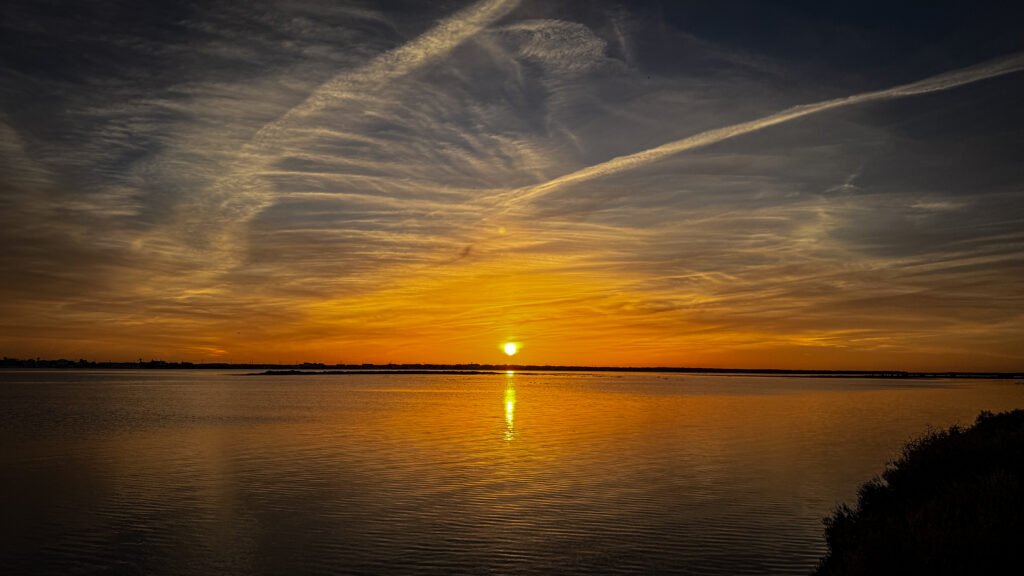
You’ll spot a few greater flamingos year-round, but the big flocks arrive October to March. Look too for spoonbills and black-winged stilts in the shallows, and — in the scrub and pines along the northern stretch — hoopoes, azure-winged magpies, and if you’re lucky, a bee-eater. We walked for over half an hour and saw nothing, and then we turned a corner and there they were: four flamingos, feeding along the bank. We weren’t even sure at first, because their bodies weren’t pink — it turns out the young ones take a few years to get their colour. We stayed until the whole trail went pink around us instead, at sunset.
Getting there: take the no.14 or no.16 Proximo bus from the city, the airport or the beach (the stop is called Ludo, around €2.35), or park along the M527-1 road. There’s almost no shade, so bring water and a hat; sunrise and sunset are best for the birds but worst for mosquitoes, so pack repellent too. For a fuller rundown, We Travel Portugal and Birdingplaces both map the trail clearly.
Getting out on the water (the calm way)
We did the white-knuckle version of being on the water — see the warning further down — but the Ria Formosa is really best met slowly. Two gentler ways onto it:
- The ferry to Ilha Deserta. Animaris runs boats from Faro out to the Ilha Deserta (also called Barreta), the only uninhabited barrier island in the lagoon — empty sand, huge skies, and a single solar-powered restaurant, Estaminé, if you want fresh fish with the Atlantic at your feet.
- A slow eco or birdwatching tour. For the lagoon itself, Formosamar runs calm, shaded boats with lifejackets for all ages — their birdwatching tour and sunset tour are both a world away from the slamming, high-speed offshore kind.
Day 2 — A day trip to Tavira
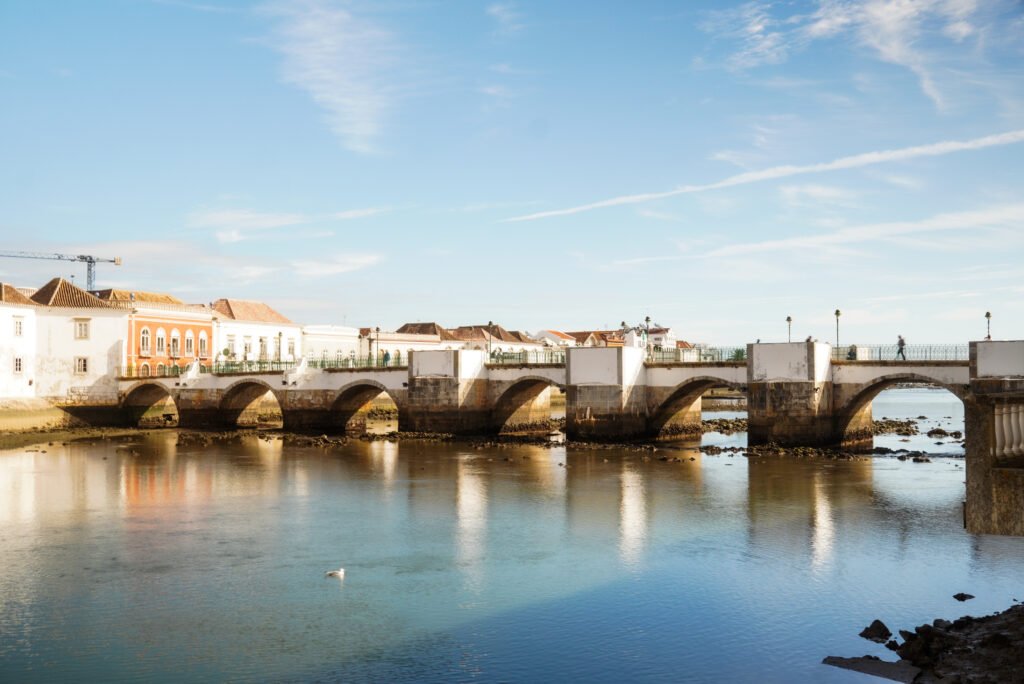
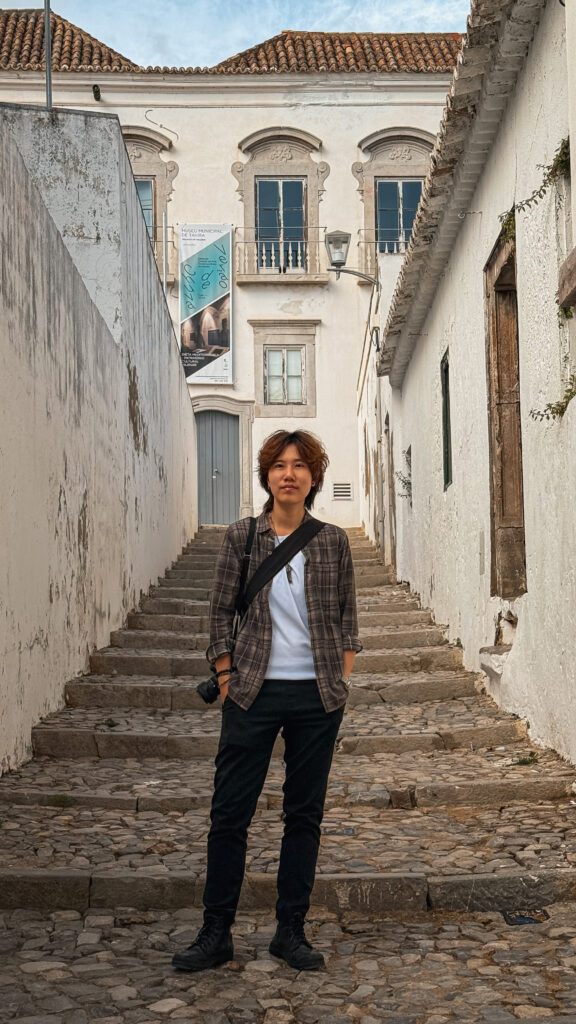
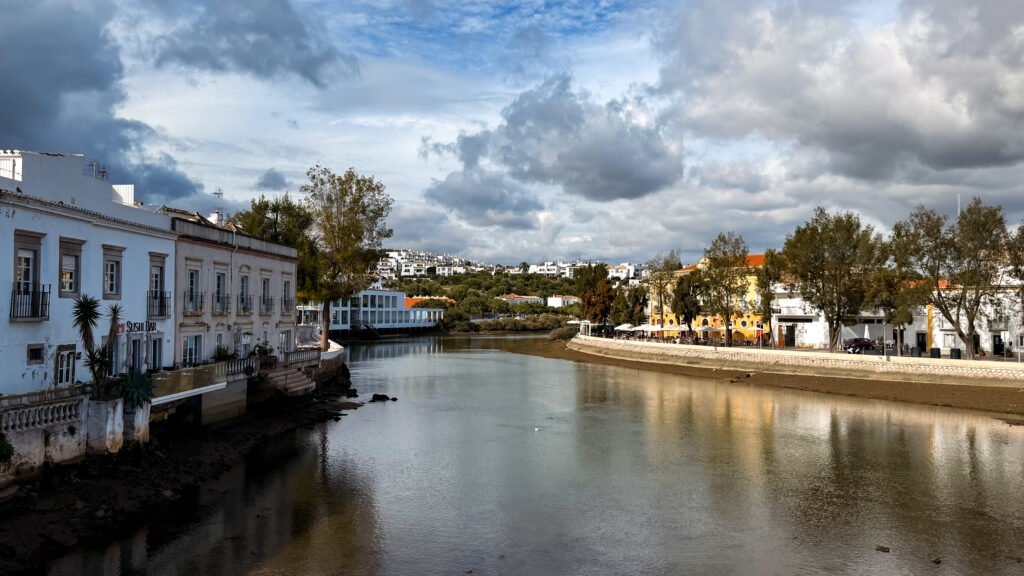
Hop on the regional train east and in well under an hour you’re in Tavira, a riverside town split by the Gilão and stitched together with low bridges. I loved it the moment we arrived — it’s gentle and walkable, the kind of place you slow right down in without meaning to. After a morning of cancelled plans back in Faro, it felt like a gift.
Castelo de Tavira
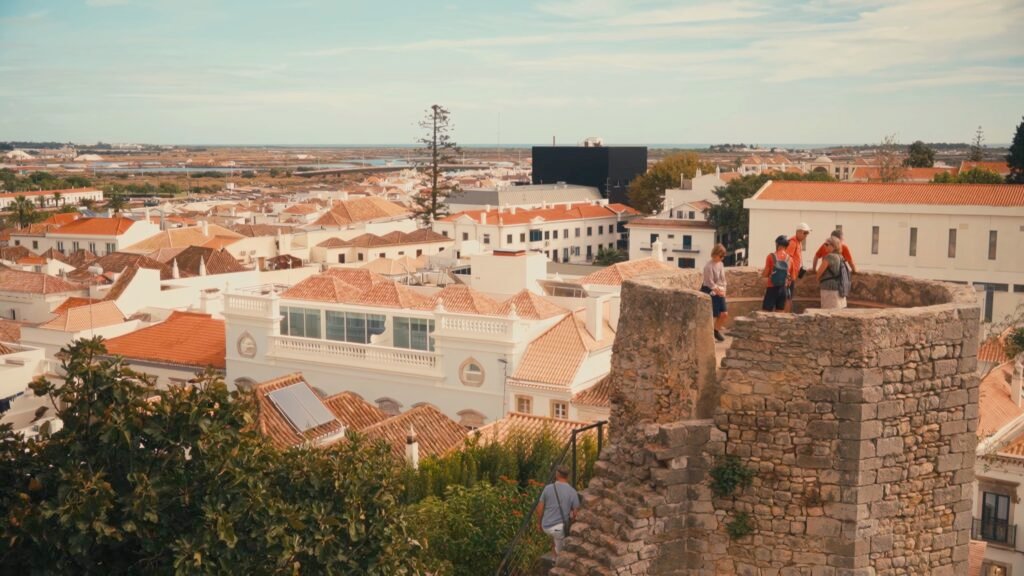
Climb up to the Castelo de Tavira, the old castle walls above the town. The history here goes deep: archaeologists found a stretch of Phoenician wall dating to the 8th century BC, making this one of the oldest settled spots on the whole coast. The Romans knew it as Balsa; the Moors fortified it as at-Tabira; it was taken by the Order of Santiago in 1239, strengthened by King Dinis around 1292, and finally knocked about by the 1755 earthquake. What’s left now wraps around a small, pretty garden.
The view from the walls is the reason to come — the whole town laid out below you, church towers and tiled roofs. And it’s completely free to go in, which I did not expect. Go up if you can.
Igreja da Misericórdia
Down in the town, step into the Igreja da Misericórdia, the Church of Mercy. It’s considered the finest Renaissance building in the Algarve — built between 1541 and 1551 by André Pilarte, the same master mason who worked on the great Jerónimos Monastery in Lisbon. The carved limestone doorway is worth a pause on its own, with twisted columns and figures of Faith and Charity.
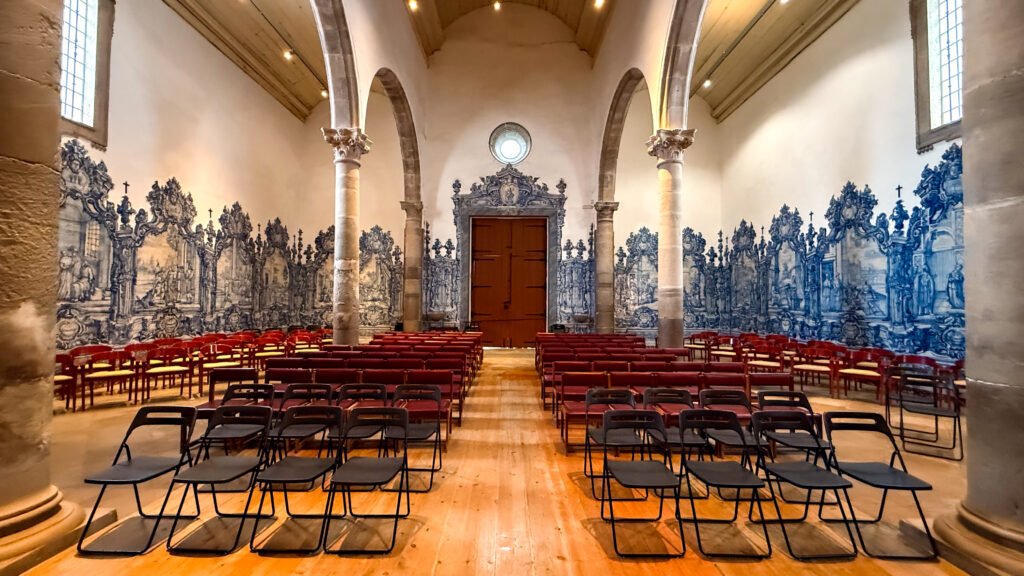
But it’s the inside that stops you. The walls are lined with blue-and-white azulejos from around 1750 — fourteen large panels, each one illustrating one of the fourteen works of mercy. We had the whole place to ourselves and just took our time, walking slowly through every panel. It’s quiet, and a little different from any church we’d seen.
Tip: Pair the castle and the church with a slow riverside lunch — Tavira is made for it. We ended up at an Irish bar on the water, of all things. I know — all the way to Portugal and we pick an Irish bar — but the table was right on the river, and we will always choose the seat by the water.
Back in Faro that evening, we did the single most touristy thing on offer and climbed onto the little sightseeing train. We figured half an hour; it was a full hour, rattling over cobblestones the whole way. It’s genuinely the bumpiest ride I’ve ever taken — well, the second-bumpiest, after the boat — and we loved every minute of it. We finished the day at a rooftop bar watching the sun go down (see the sunset spots below).
Day 3 — The Benagil cave & a slow last morning
The Benagil sea cave
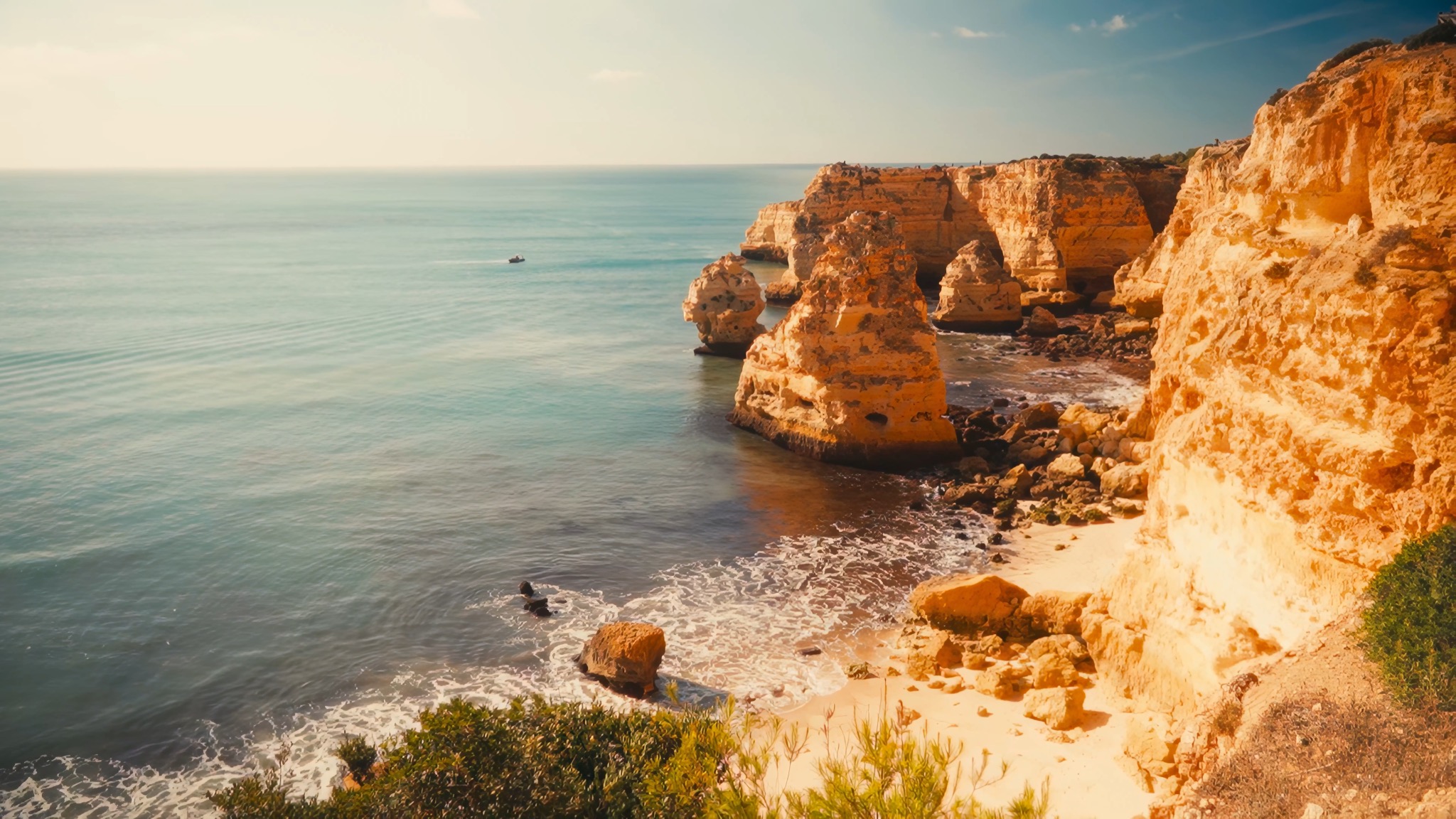
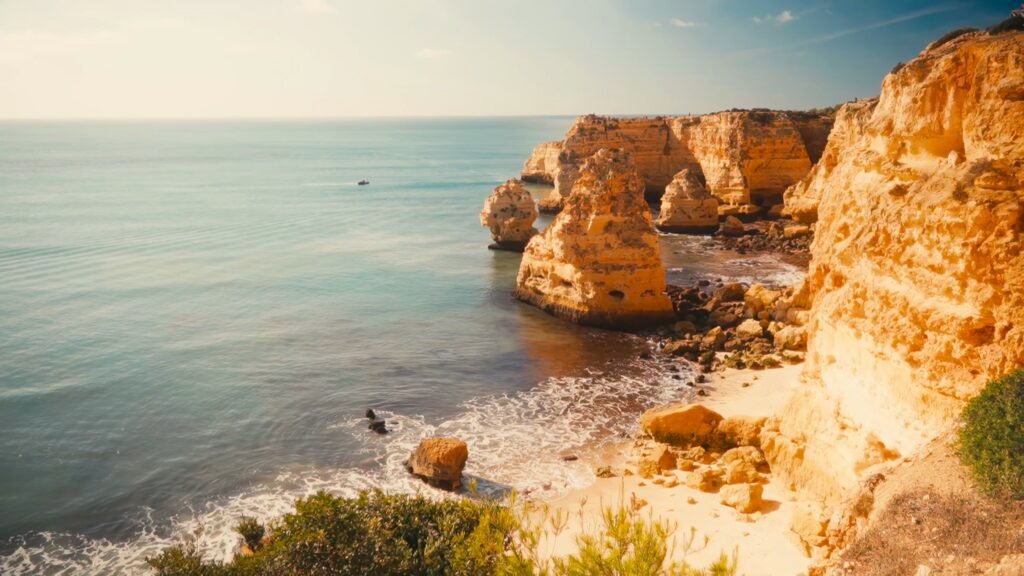
The Benagil cave is the Algarve at its most postcard-famous, and for once the photos don’t oversell it. It’s a vast sea cavern carved into Miocene limestone that’s roughly 20 million years old — the same shallow-sea sediment, dissolved and pounded by the Atlantic over millennia until the roof opened into a natural skylight, a perfect circle of sun above a hidden beach.
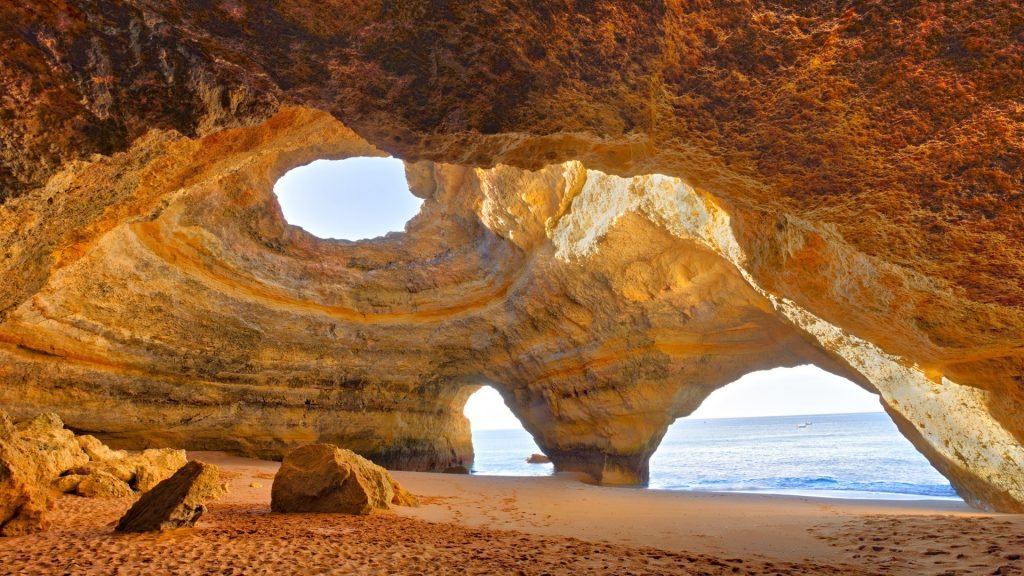
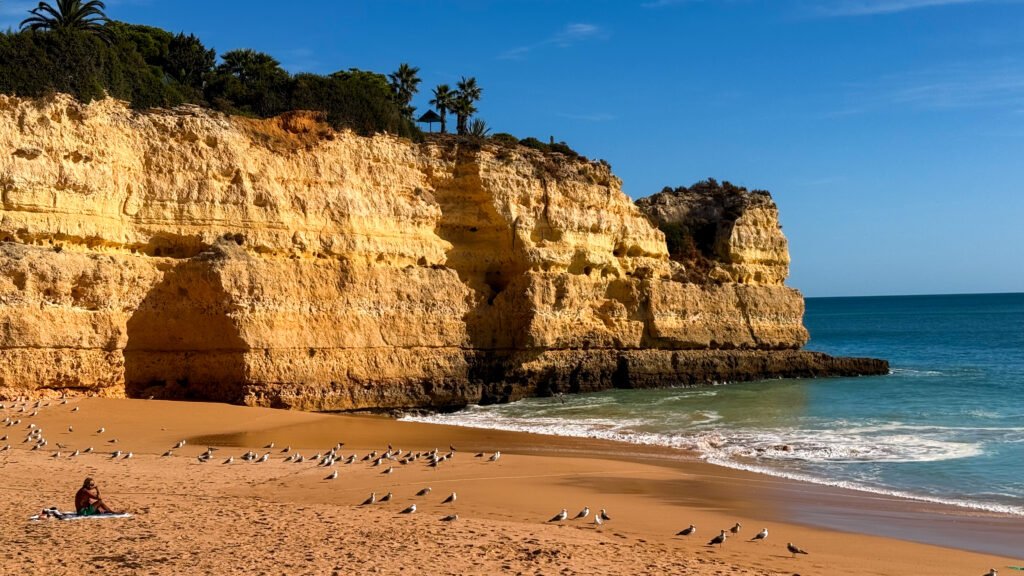
You can only reach it from the water — by boat, kayak or SUP — and the sea has to cooperate, which in our case it finally, finally did after days of saying no. We went with a local guide, Sebastian, whose tour we found on Get Your Guide. He picked us up right at Faro station and drove us the whole way, took us up over the cliffs to look down into the cave from above, and told us the stories behind it before we went in by water. If you’re based in Faro and don’t want to rent a car or train all the way to Portimão or Lagos and bus it from there, a pickup tour like that is by far the easiest option — I’d recommend it.
Tip: Book a tour that includes transport if you’re staying in Faro, and build in flexibility — sea conditions cancel these trips often, especially off-season. A good operator will refund you in full if it can’t run; ours promised exactly that right up until the moment the sea let us in.
A slow last morning
If you’ve got the morning before your flight, spend it slowly. A coffee at the little harbour, one more walk through the old town, and as many pastéis de nata as you can reasonably justify. I noticed something here that stuck with me: hardly anyone takes their coffee to go. People sit down and actually drink it. In London I’m always half-finished and rushing — the Portuguese just seem to know how to live.
Is 3 days in Faro enough?
Yes — three days is the sweet spot. It’s enough to see Faro’s old town properly, walk the Ria Formosa, and still fit in a day trip to Tavira plus the Benagil cave without rushing. Faro itself is small, so a day covers the historic centre and the lagoon comfortably; the other two days are best spent on day trips out. If you only have two days, drop Benagil. If you have more, add another Ria Formosa island or a second Algarve town like Olhão.
Where to eat in Faro
We ate better here, for far less, than we ever do in London. The places we’d go back to:
Cafés & sweet things
- Café Natali — our regular breakfast spot, a lovely local café in Faro. Great coffee, and some of the best pastéis de nata we had the whole trip.
- Pastelaria Coelho — a popular little spot near the old town. Order the leite-creme, Portugal’s take on crème brûlée: a crisp burnt-caramel top over a soft, silky custard. A lot of Portuguese desserts defeated me with how sweet they were, but this one was perfectly balanced and smooth — genuinely one of the nicest things I ate all trip. It’s a simple eatery where everything from the mains to the puddings gets good reviews, and it’s Lonely Planet-listed. I’d happily go back.
- Vanilla Faro — for when you want something sweet. Excellent ice cream, and waffles worth the detour.
Restaurants
- A Venda — where to go for dinner if you want something special, with loads of brilliant vegetarian options. Save room for the pudding cake — we’re still thinking about it.
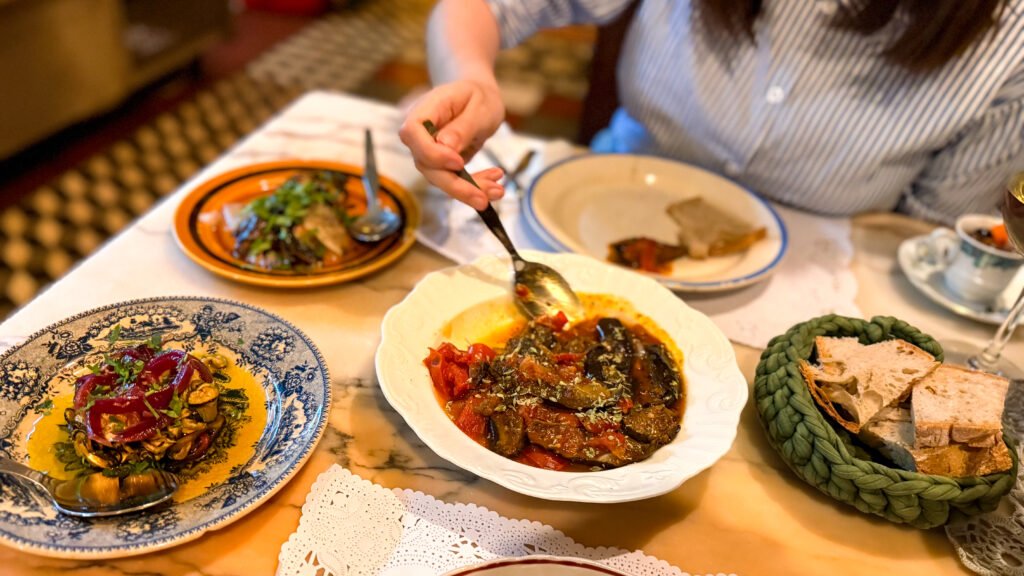
- Wax RestoBar — great fish and a good atmosphere, with views over the river.
- A Tasca do João — a handful of tables facing a fountain on a quiet square; come for small plates, cured meats, cheese and good wine. (A Lonely Planet pick.)
- Mani’s mo:mo & restaurant — Himalayan momo dumplings, including really good vegetarian options, and very highly rated.
- In Tavira, the riverside Irish bar I mentioned earlier. Yes, an Irish bar in Portugal. No, I’m not sorry — the seat on the water was too good to pass up.
Sunset drinks with a view
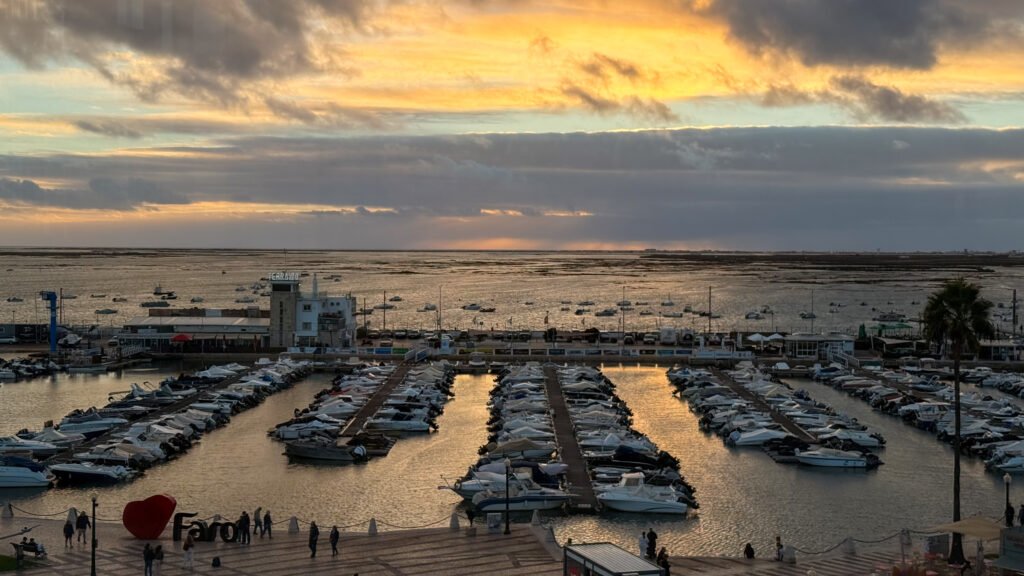
- Hotel Occidental Faro — you don’t need to be staying here to ride up to its open-air rooftop bar, which is a lovely place to watch the sun go down over the water.
- LAB Terrace – Sunset Bar — another good rooftop option for golden hour.
One thing across the board: a lot of places here are cash only, so come prepared (more on that below).
Know before you go
Bring cash. We needed it far more than expected — lots of cafés and restaurants are cash only. Look for fee-free bank ATMs rather than the standalone machines, which often charge around five euros.
Be honest with yourself about boat tours. The dolphin trip we took out into the open Atlantic was genuinely frightening — a small boat, huge swell, the whole thing slamming across the water. I nearly had a panic attack, and we didn’t see a single dolphin. If you’re older, pregnant, or you don’t know how your body handles that kind of fear, think hard before booking a high-speed offshore tour. The calmer Ria Formosa lagoon trips and the Ilha Deserta ferry (see “Getting out on the water,” above) are far gentler ways to be on the water.
November is a wonderful time to visit. The weather was still kind, the light was soft, and the old town was blissfully empty. Some things run on reduced hours and the sea cancels boat trips more often, but for the quiet alone it’s worth it.
Faro is full of cats. That’s not a tip. I just wanted you to know.
What I’d do differently
I’d build in more slack for the sea. So much of what we’d booked got cancelled and rebooked at the last minute, and if I went again I’d treat the boat trips as “maybe” rather than fixed points, and keep a calm backup plan for each one — the way Tavira saved a cancelled morning for us.
I’d also give the Ria Formosa more time. We caught the flamingos almost by accident at the end of a long day; next time I’d take the ferry out to one of the islands properly and spend a whole morning out there.
And I’d stop trying to plan it so tightly. The best parts of this trip were the ones we didn’t book.
We came to Faro to escape the cold and ended up somewhere that quietly rearranged what I want out of travelling. A week after we flew home, the Algarve flooded — and I keep thinking about how a trip we almost didn’t take, on a sea that kept saying no, let us in anyway.
Useful links
- Faro Airport
- CP — Portuguese trains (Faro–Tavira)
- Ria Formosa Natural Park (ICNF)
- Ludo Trail guide — We Travel Portugal
- Ilha Deserta ferry (Animaris)
- Formosamar — Ria Formosa boat tours
- Faro Cathedral (map)
- Capela dos Ossos / Igreja do Carmo (map)
- Castelo de Tavira (map)
- Igreja da Misericórdia, Tavira (map)
- Benagil cave (map)
You might also like
Europe
• Exploring Florence, Italy: 4-Day City Break
• 4 Days in Budapest: Best Places to Visit (2026)
USA
• Yellowstone, Teton & Zion National Park
• Grand Canyon National Park & Antelope Canyon Trip
UK
• 3 Days in London: A Local’s Guide
• 3 Days in Oxford, Cotswolds and Bath: Beautiful England Countryside
• East London: Brick Lane & Spitalfields
• A Day at Hampton Court Palace (London Day Trip)
• Dalston, East London: The Neighbourhood Where Everyone Came From Somewhere Else
• Canterbury Day Trip from London: A Beautiful Small City Worth Visiting