


I grew up in Taipei. I live in London now and only get back about once a year, and every time I go home, friends ask me the same thing: “What should I do in Taipei that isn’t 101?”
This 4-day Taipei itinerary is my answer. It’s the route I took in February 2026, first with my partner and then with my mum and a friend. It covers the places I’d take you if you were visiting me: a riverside town with four hundred years of colonial history and one of the best sunsets I’ve ever seen, a mountain grassland I was dragged up as a kid, an old sake brewery turned creative park, and the hot spring neighbourhood where I used to live. None of it is secret. Most of it is skipped by people who only have time for the famous list.
If it’s your first time in Taipei, start with my 7 Days in Taipei guide. It covers the main sights: Taipei 101, Dadaocheng, Jiufen, Maokong and the rest of the famous list. If you’ve already done those, this is what comes next.
[EMBED YOUTUBE VIDEO HERE]
Quick trip info
- Duration: 4 days (drop Day 3 if you only have three)
- Season: I went in February. It’s cool and sometimes foggy up the mountain, and ideal for hot springs. Avoid mid-summer afternoons on Yangmingshan unless you like thunderstorms.
- Best for: Second-time visitors, anyone who likes history and nature over shopping, vegetarians (there are good options every day)
- Getting around: The MRT Tamsui–Xinyi (red) line reaches Tamsui and Beitou. Qingtiangang is a bus ride up from Jiantan MRT.
What’s in this guide
- Getting around Taipei
- Where to stay
- Day 1: Tamsui
- Day 2: Yangmingshan and Ningxia Night Market
- Day 3: Xingtian Temple, Huashan and shaved ice
- Day 4: Beitou hot springs
- Where to eat in Beitou
- What I’d do differently
- Useful links
Getting around Taipei
Get an EasyCard at any MRT station and top it up. It works on the MRT, buses, and in convenience stores, and you’ll use it for every day of this itinerary.
For Tamsui, take the red line to the last stop, Tamsui Station. It’s about 40 minutes from Taipei Main Station. For Beitou, take the same line to Beitou and change to the one-stop branch line to Xinbeitou.
For Qingtiangang, the easiest route is bus S15 (小15) from Jiantan MRT Station, which runs up to the Qingtiangang stop. You can also take a bus to the Yangmingshan bus terminal and switch to the 108 park shuttle, which loops around the national park. Check the Taipei eBus site for times before you go, especially on weekends when queues build up.
Where to stay
For most of the trip, stay anywhere along the red line. Zhongshan and Shuanglian are both handy for Day 2’s night market and Day 3.
For the last night, stay in Beitou. Hot spring hotels are the reason the neighbourhood exists. Many rooms come with a private bath piped straight from the springs, so you can soak without worrying about public-bath rules. I lived in Beitou for a while and I’ve stayed at a few of these hotels over the years. It’s the best way to finish a trip to Taipei.
Day 1: Tamsui
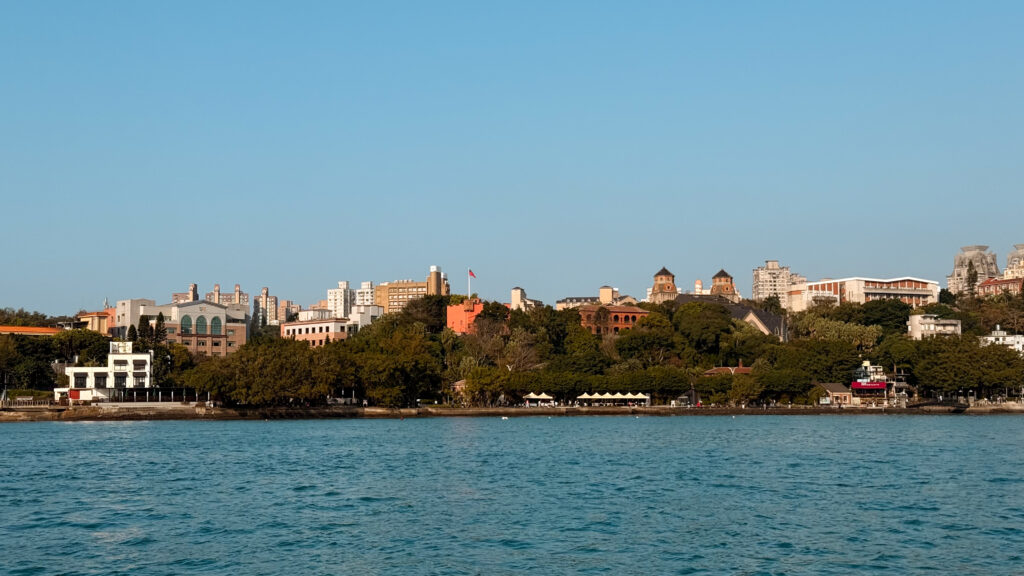
Tamsui sits where the Tamsui River meets the sea, on the northwestern edge of the city. Taiwan has been colonised by a lot of different powers, and Tamsui is where you can see most of them in one afternoon: Spanish, Dutch, Qing Chinese, British, Japanese. Each one left a building behind. My partner and I spent the whole day here, walking uphill through the history in the afternoon, then down to the water for sunset.
Start at Fort San Domingo and work your way down. The sights are close together and the route ends at the river right as the light goes gold.
Fort San Domingo (紅毛城)
Map: Open in Google Maps
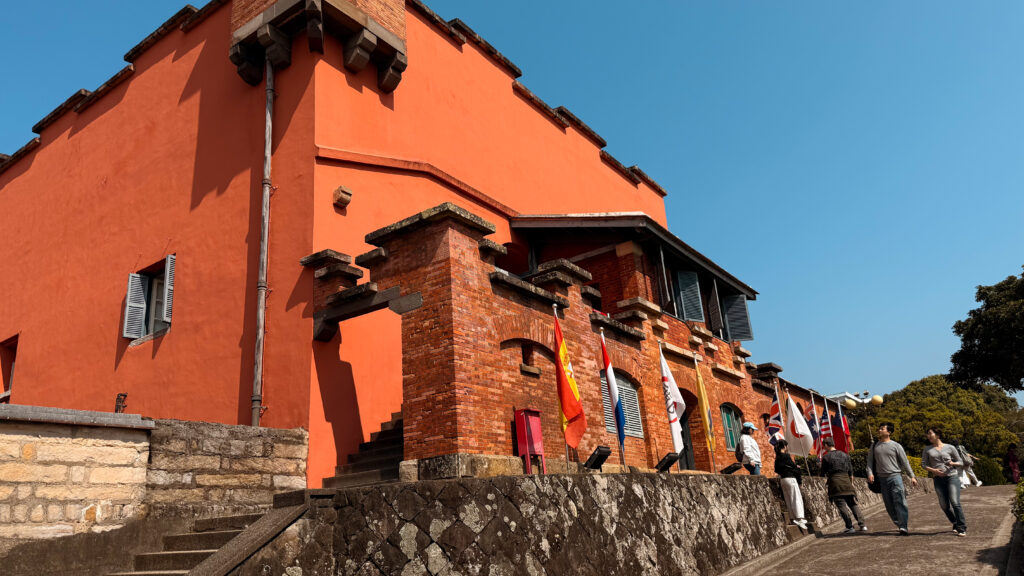
Fort San Domingo started with the Spanish, who built a fort on this hill in 1628. The Dutch drove them out and rebuilt it in 1644, and locals named it Hongmaocheng, the “Fort of the Red-Haired”, after the Dutch. Two centuries later the British leased it as their consulate, and they stayed from 1867 until 1972. The red-brick consul’s residence next door, built in 1891, is pure Victorian: verandas, a steep roof, and a lawn that looks out over the river mouth.
It’s a strange feeling standing in the old fort. Every country that wanted Taiwan seems to have wanted this exact hilltop.
Tip: One ticket from the Tamsui Historical Museum covers Fort San Domingo, the Little White House and several other sites nearby. Buy it at the first one you visit.
Tamsui Customs Officers’ Residence, the Little White House (小白宮)
Map: Open in Google Maps
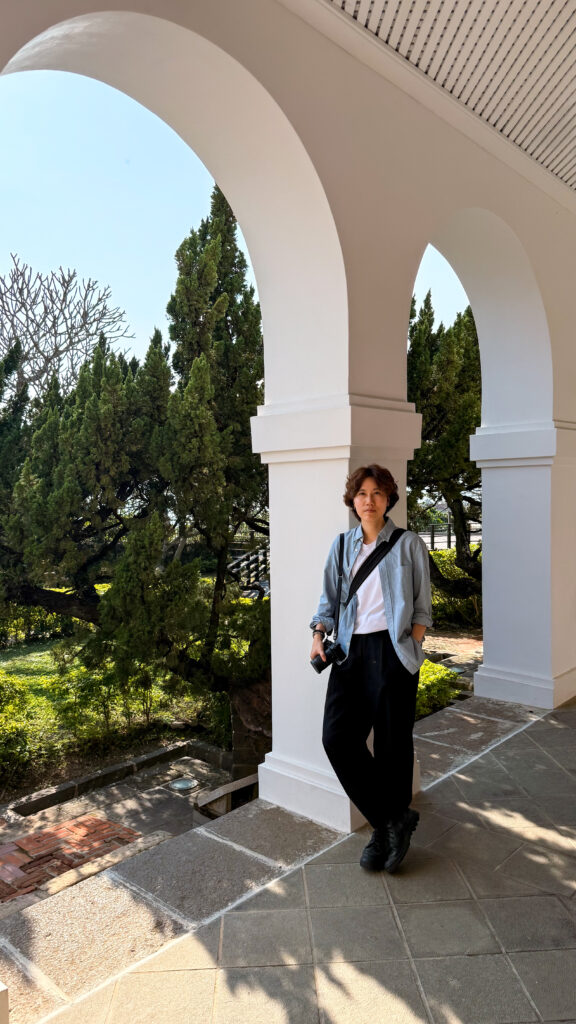
A short walk away, this whitewashed house with its row of arches was built in the Qing dynasty to house the foreign officials who ran Tamsui’s customs after the port opened to international trade in the 1860s. The Qing government hired Westerners to run its customs service, so the people collecting Chinese taxes here were mostly British.
Go for the veranda. It faces straight across the river to Guanyin Mountain, and it’s one of the calmest spots in Tamsui.
Former Residence of Tada Eikichi (淡水街長多田榮吉故居)
Map: Open in Google Maps
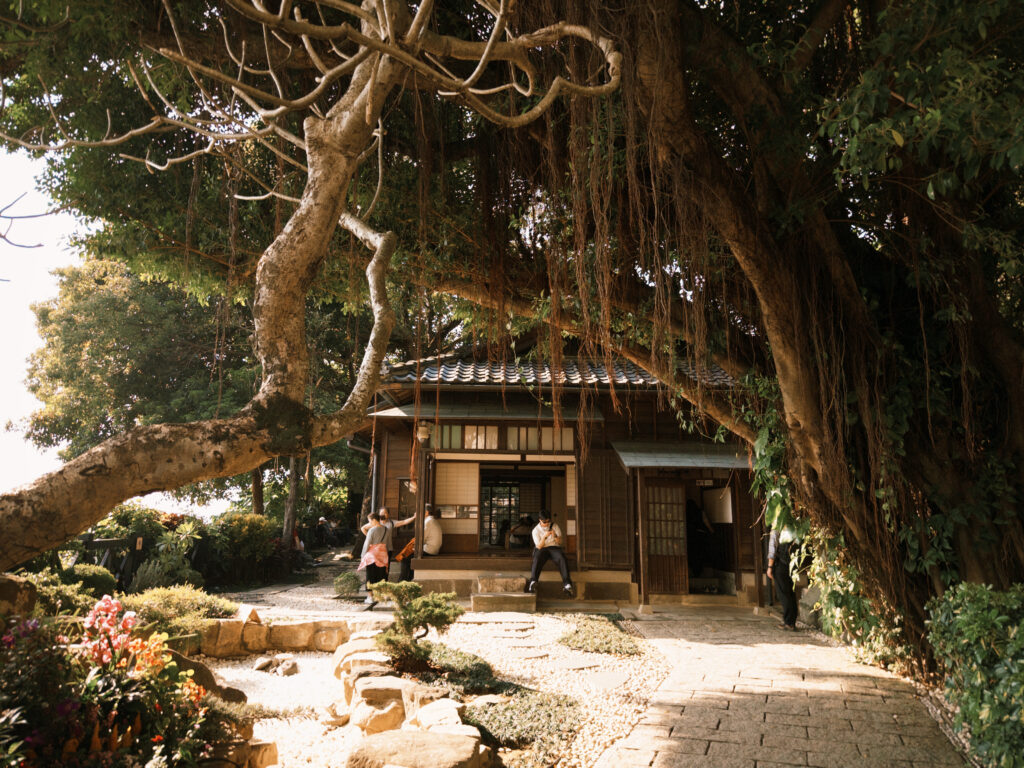
This small Japanese-era wooden house belonged to Tada Eikichi, a businessman who became Tamsui’s town mayor during Japanese rule. After the Spanish fort and the British consulate, it’s a quiet change of pace. There are tatami rooms, a wooden veranda (engawa), and a garden you can sit in with your shoes off.
It’s easy to walk past. Don’t.
Tamsui Church (淡水禮拜堂)
Map: Open in Google Maps
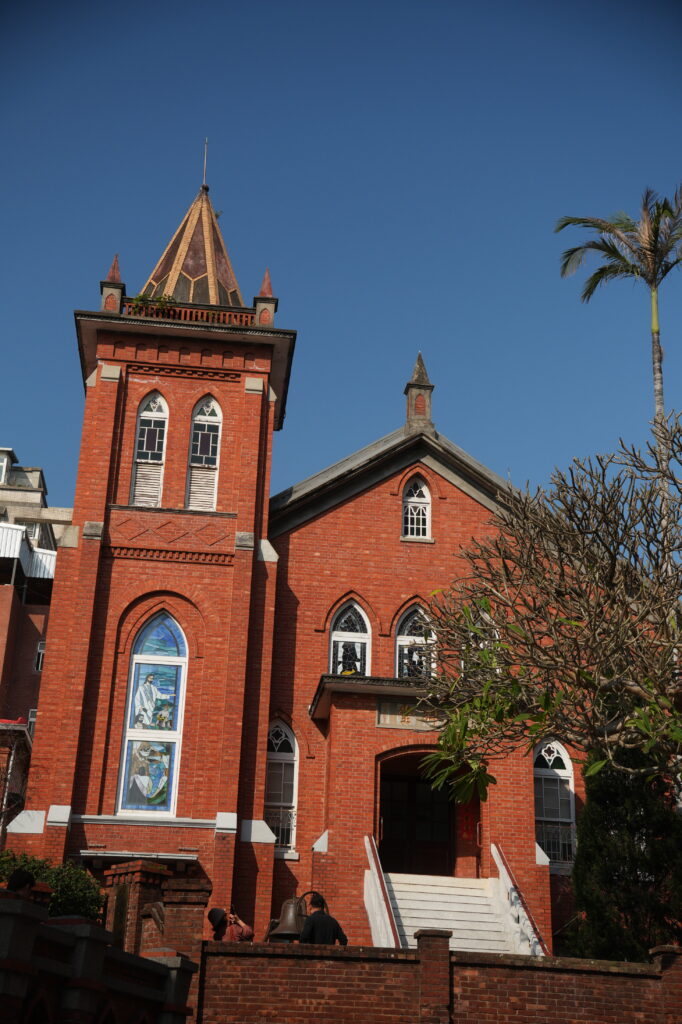
The red-brick Presbyterian church with the bell tower is one of Tamsui’s landmarks. The congregation traces back to George Leslie Mackay, the Canadian missionary who arrived in Tamsui in 1872 and also founded some of Taiwan’s first Western medical and educational institutions. The current building dates from the early 1930s.
It’s still a working church, so check whether there’s a service before you go in.
Chen Cheng-po Outdoor Gallery (陳澄波戶外美術館)
Map: Open in Google Maps
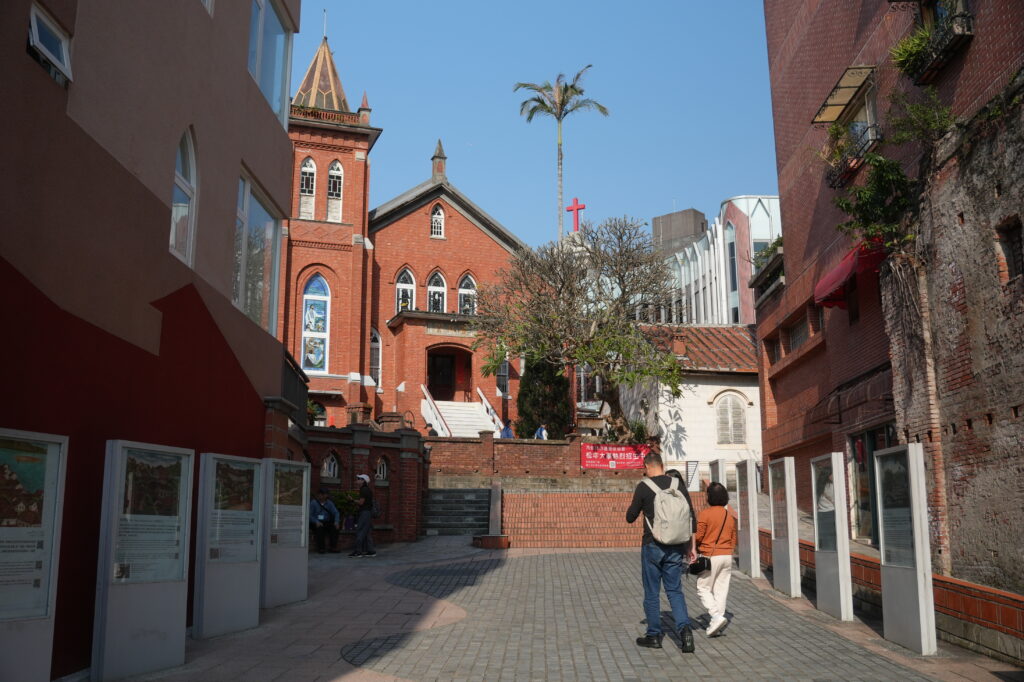
This is the stop I’d most like you not to skip. Chen Cheng-po was one of Taiwan’s first painters to work in Western oils. He was born in Chiayi in 1895, and in the mid-1930s he came to Tamsui again and again to paint its streets, its church and its river. He was killed in 1947 during the 228 Incident, and for decades his work was barely spoken about in Taiwan.
In 2017, the Chen Cheng-po Cultural Foundation set up an outdoor gallery of twelve of his Tamsui paintings. Seeing his Tamsui on canvas, then walking out into the same streets and river views eighty-odd years later, makes you feel the history more than any museum label does. For me, he’s one of the most important figures in Taiwanese art. Understanding him helps you understand what Taiwan lost, and what it’s since fought to remember.
Tip: The main cluster is in the plaza near Tamsui Church. Look up his Sunset in Tamsui (淡水夕照) before you go, so you recognise the view when you reach the river.
Tamsui Customs Wharf (淡水海關碼頭)
Map: Open in Google Maps
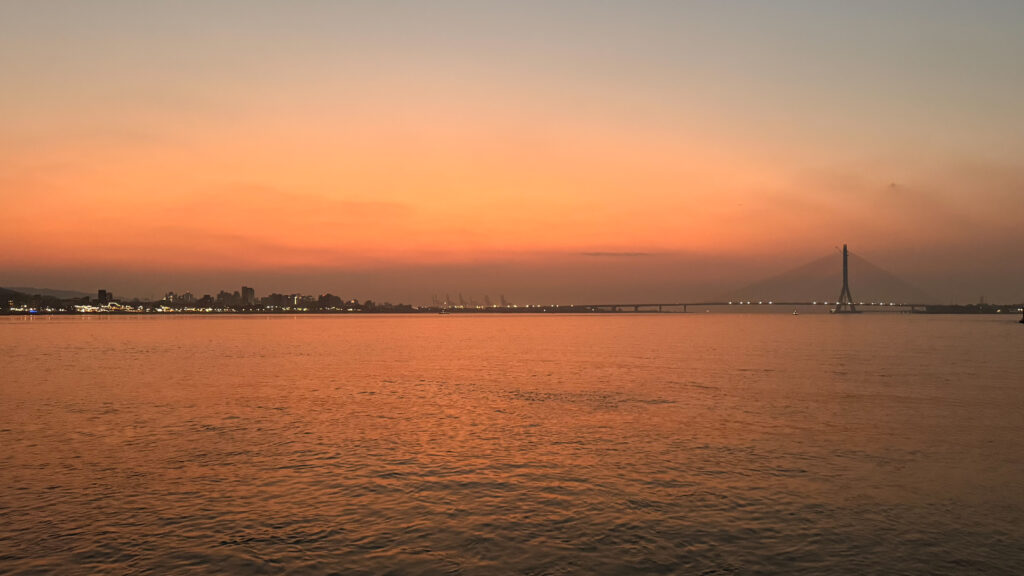
End the day at the old customs wharf, where the warehouses that once handled Tamsui’s shipping are now open to visitors. Then find a spot on the waterfront and wait.
I’ve watched a lot of sunsets in a lot of countries. The one over the Tamsui River mouth, with the sun dropping behind Guanyin Mountain, is still one of the best. If you want to see it from the water, small boats run along the river from here. It was an easy, cheap way to watch the sky change colour.
While we were waiting, a dog on a skateboard rolled past us along the promenade, with its owner jogging behind. I have no further information. It was the best thing I saw all day.
Tamsui Old Street (淡水老街)
Map: Open in Google Maps
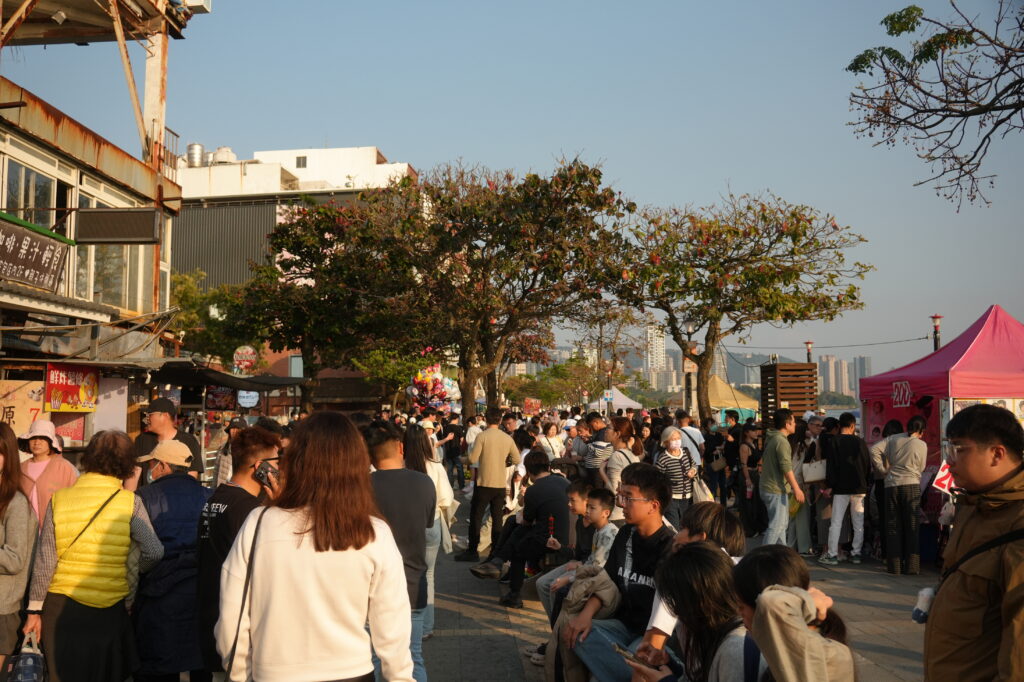
Between the historic sights and the river, you’ll keep ending up on Tamsui Old Street and the lanes around it. It’s busy and touristy, and it’s also the best place to graze. Snack stalls run the whole length of it, from a-gei and fish balls to iron eggs, the small, dark, chewy eggs Tamsui is known for. Don’t plan a meal here. Eat your way along it.
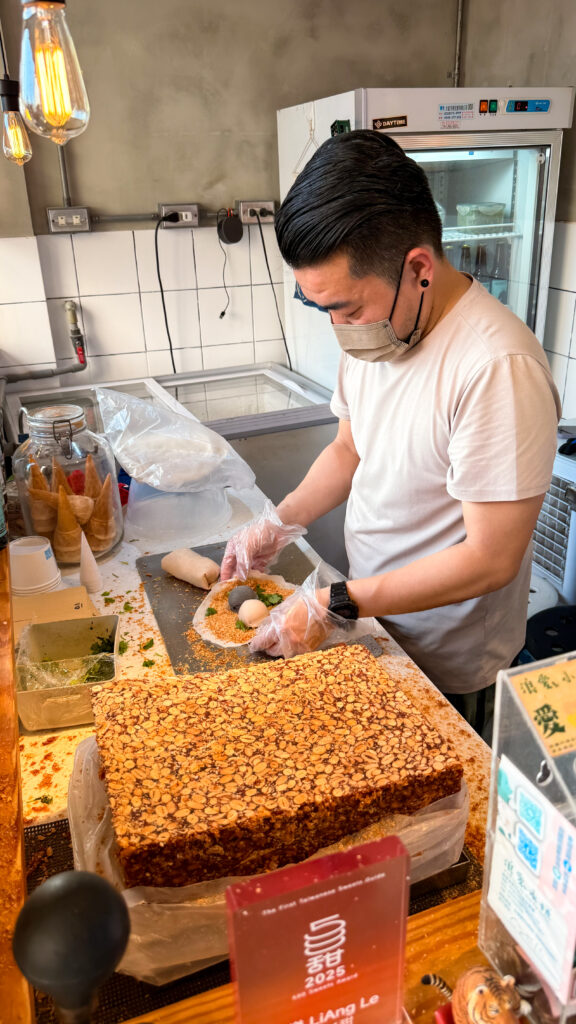
倆樂 LiAng Le (peanut roll ice cream)
Map: Open in Google Maps
I love peanut roll ice cream (花生捲冰淇淋): scoops of ice cream wrapped in a thin crepe-like skin with shaved peanut brittle, usually with a little coriander. It’s an old-school Taiwanese dessert. LiAng Le does a more modern version with lots of flavours to choose from. My picks are sesame and taro.
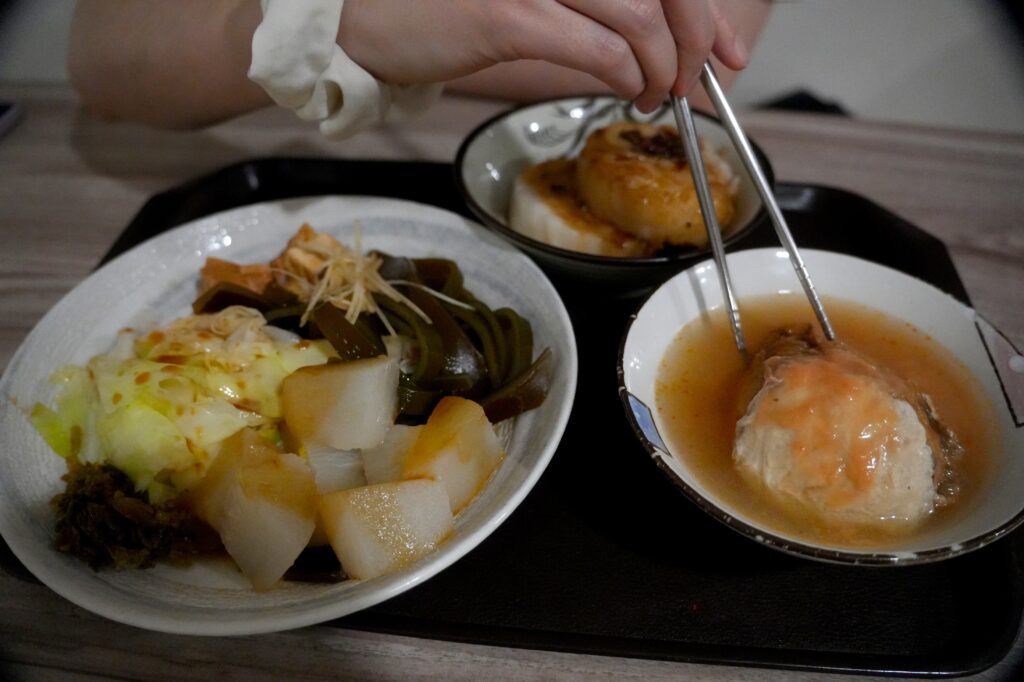
Dinner: 千囍蔬食堂
Map: Open in Google Maps
If you’re vegetarian, eat here before heading back. They do a vegetarian version of a-gei (阿給), Tamsui’s signature snack of fried tofu stuffed with glass noodles and usually sealed with fish paste. There’s also a menu of everyday Taiwanese home dishes. It’s the kind of place I’d bring a vegetarian friend who wants to try Tamsui food without asking what’s in every sauce.
Day 2: Yangmingshan and Ningxia Night Market
Day 2 goes from open grassland in the morning to one of Taipei’s best food streets at night. My mum and a friend came along, which made it feel like a proper family day out.
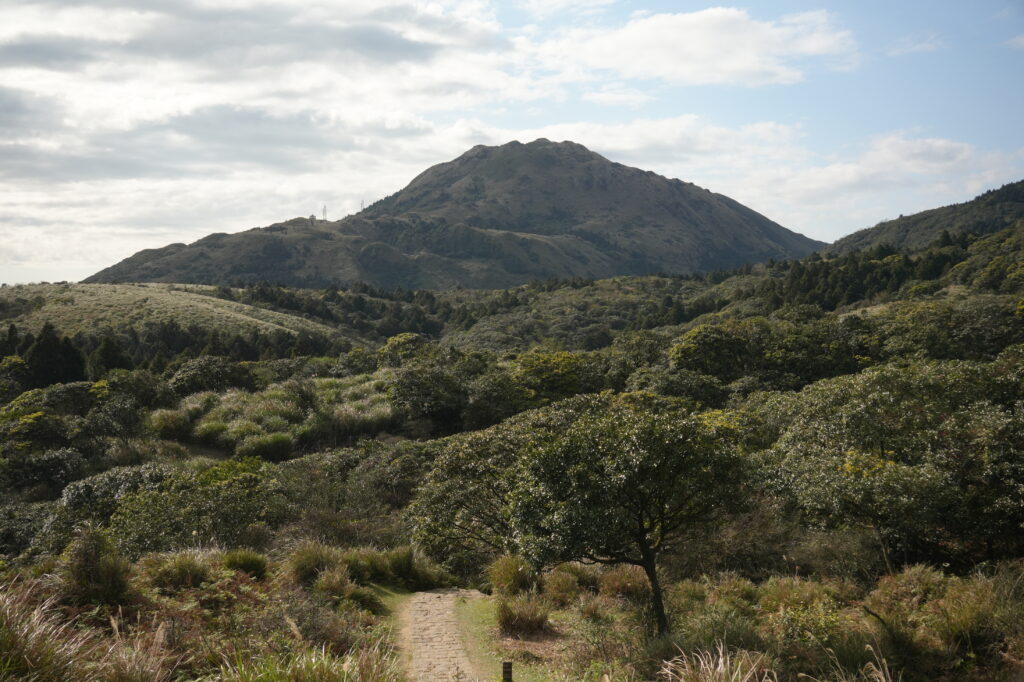
Qingtiangang Grassland (擎天崗), Yangmingshan
Map: Open in Google Maps
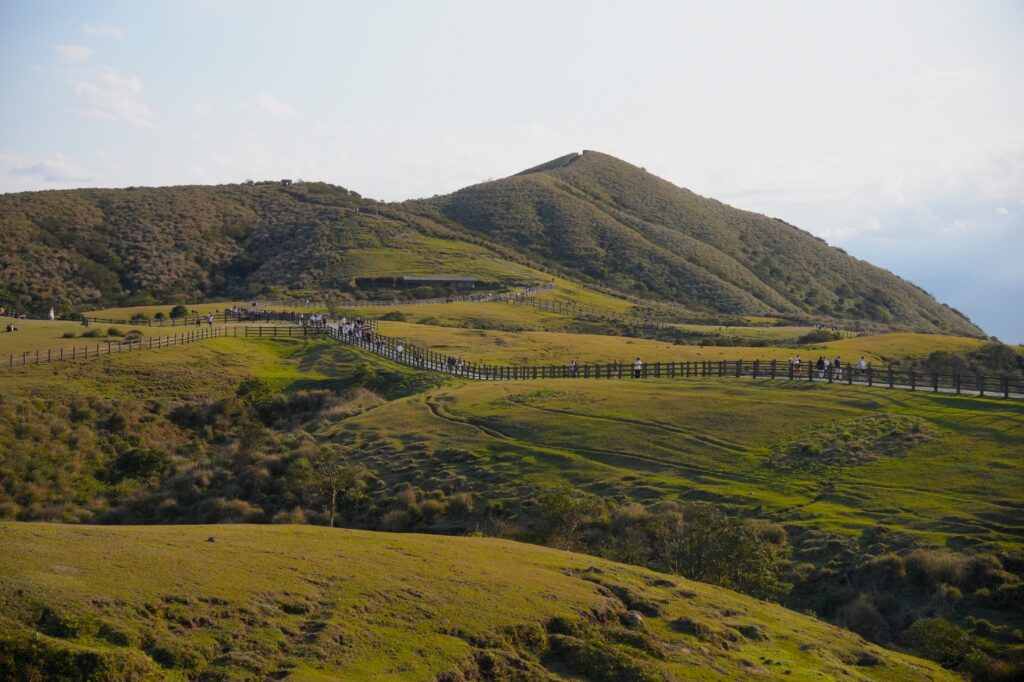
For people in Taipei, Yangmingshan is our back garden. You can leave the city after breakfast and be walking across open grassland before lunch, and that’s the part of growing up here I didn’t appreciate until I left.
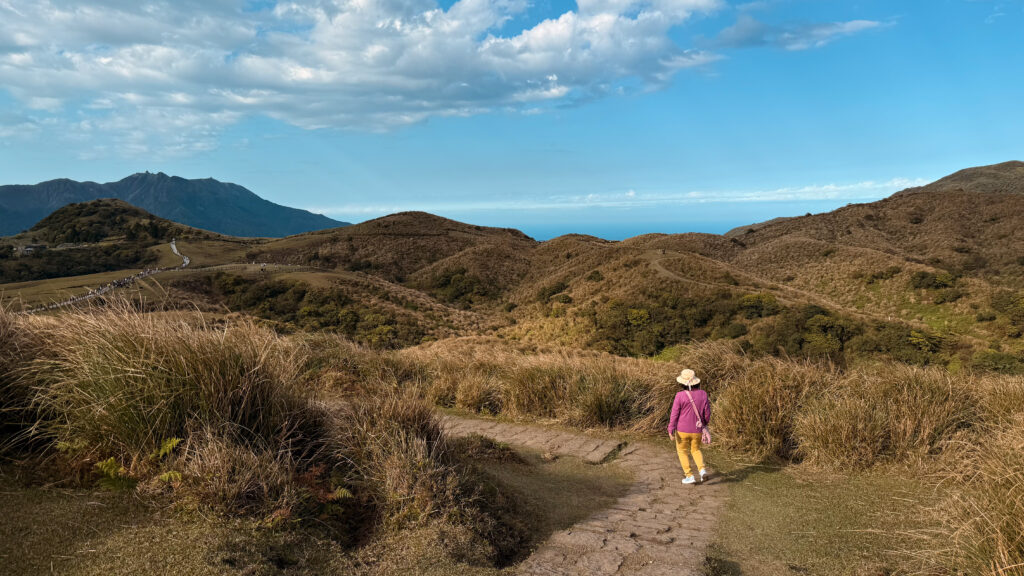
Qingtiangang is where my family took me hiking as a kid. Early. Much earlier than any child wants to be awake. I complained every single time. Going back as an adult, with my mum walking beside me on a clear, sunny day, I finally understood what I’d been given. The Chinese phrase is 身在福中不知福: you don’t know how lucky you are while you’re in it.
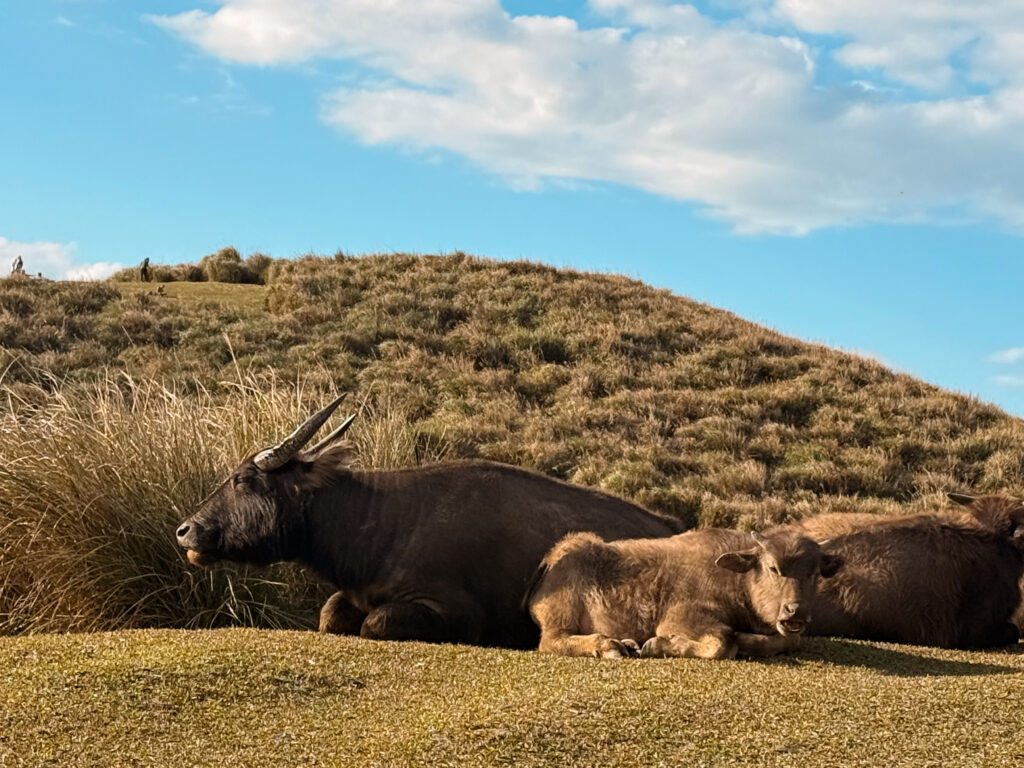
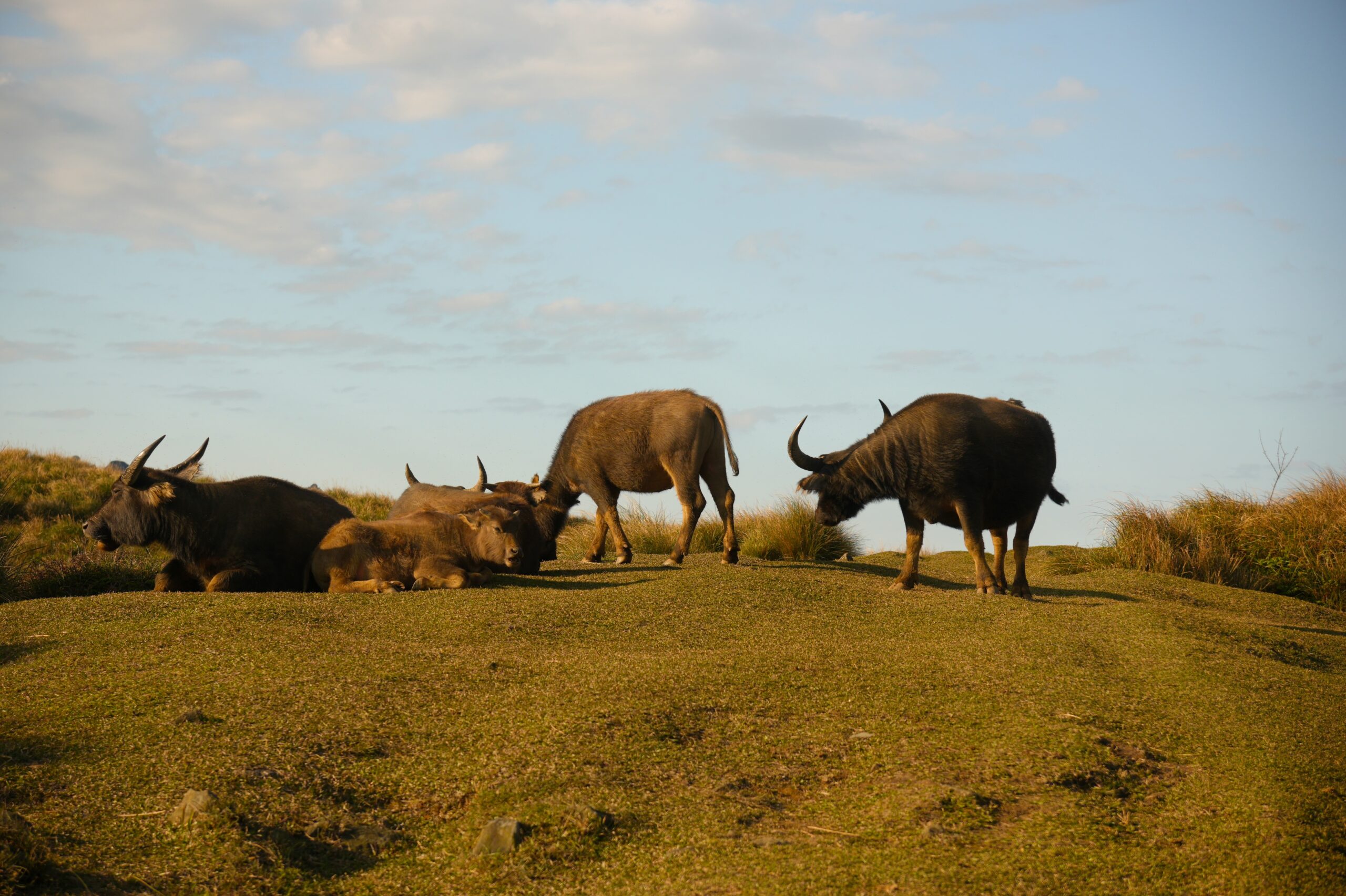
The main loop across the grassland is an easy walk on paved and stone paths, with views across the ridges on a clear day. The grassland used to be farm pasture, and the water buffalo that graze here now are the reason most people come. We got fairly close to a group of them, and it’s still one of my favourite things about this mountain.
Tip: Keep your distance from the buffalo. The national park asks visitors not to touch or feed them. Bring a layer, because even in February it’s noticeably colder up here than in the city, and the weather can change fast.
Ningxia Night Market (寧夏夜市)
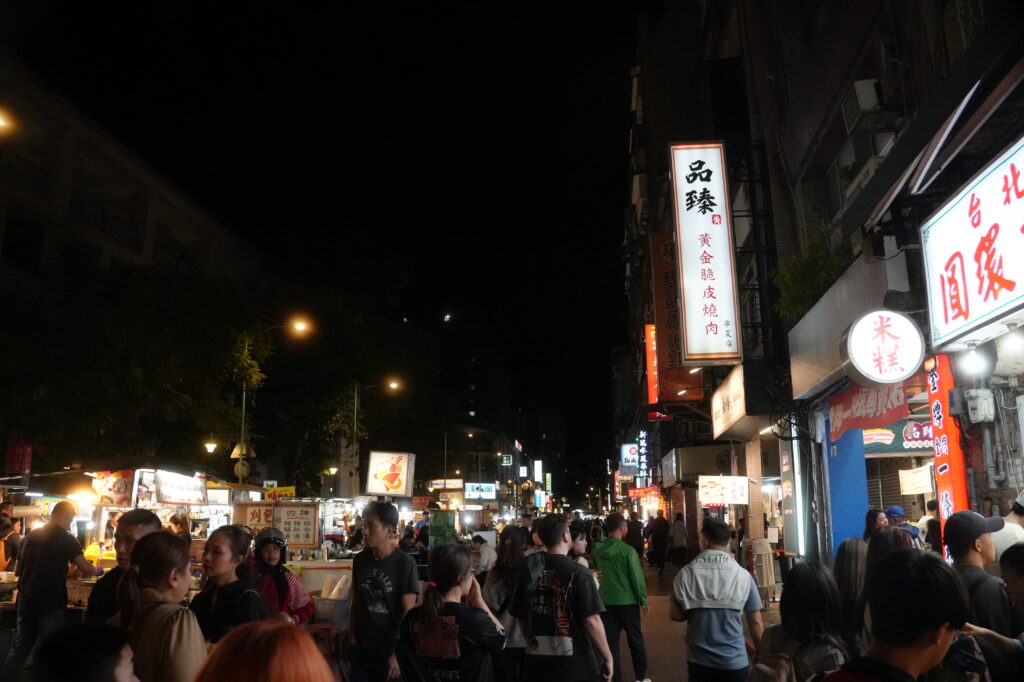
Map: Open in Google Maps
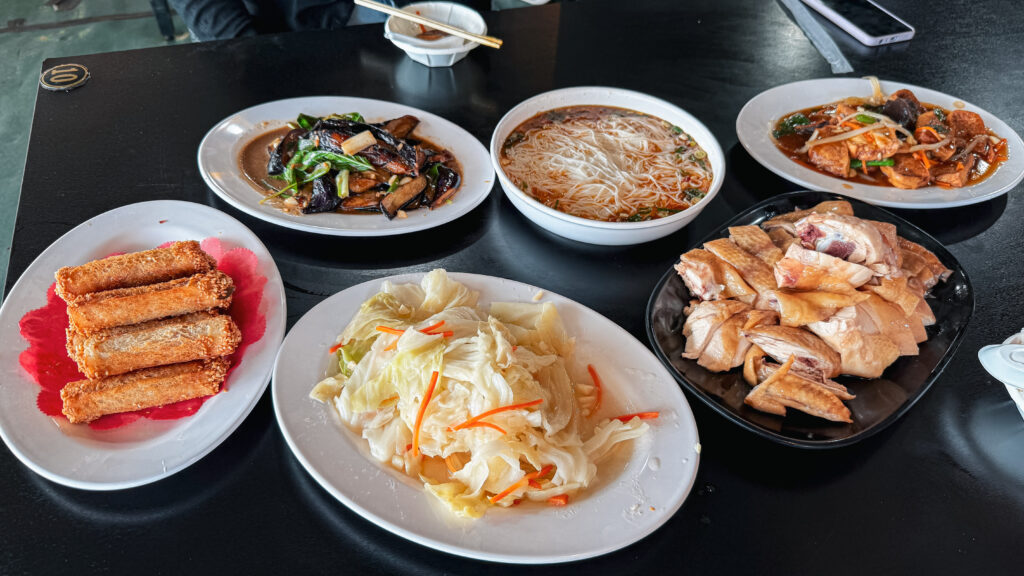
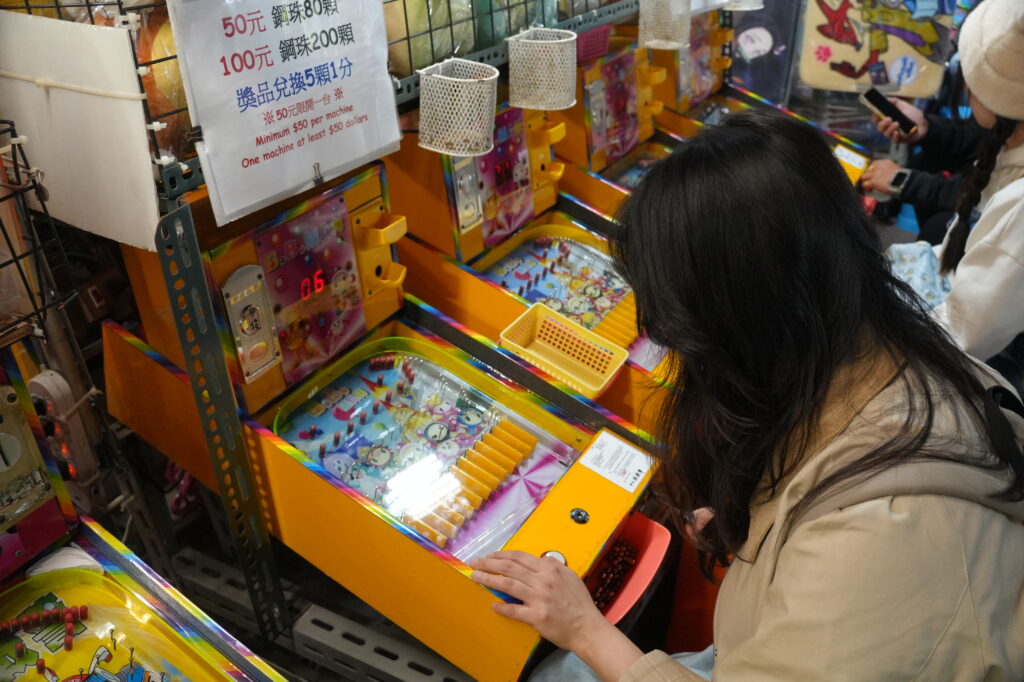
Taipei has more night markets than anyone could get through in one trip. Ningxia is compact and easy to do properly in one evening. It also has plenty of carnival-style games, which I love: the little prize stalls that make grown adults very competitive.
Go hungry. These are the stalls I’d queue for:
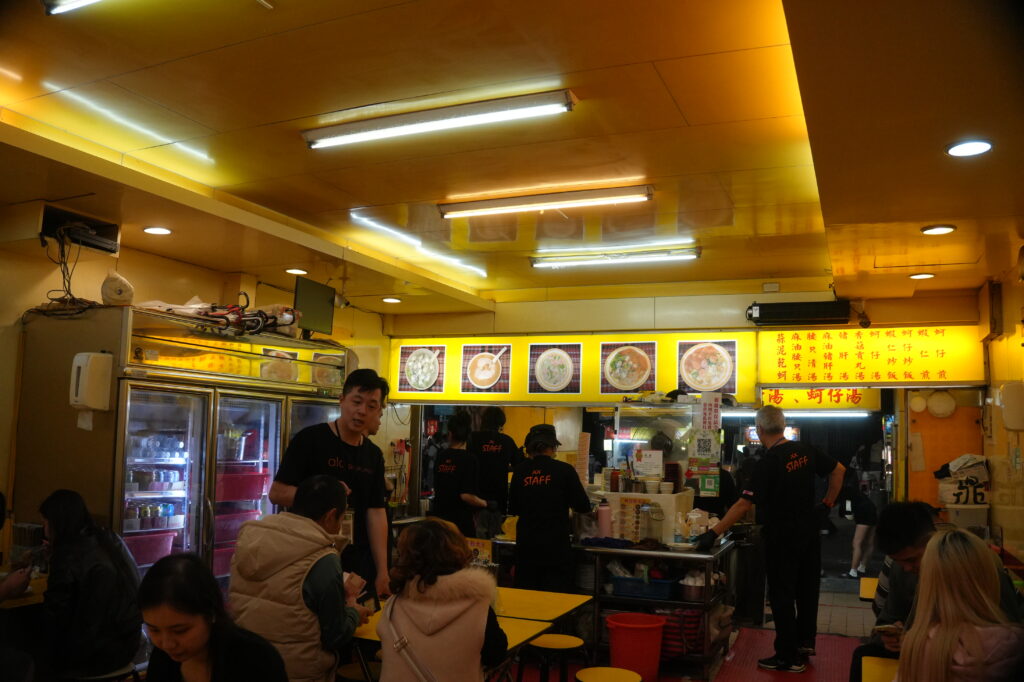
圓環邊蚵仔煎 (Yuen Huan Pien Oyster Omelette)
Map: Open in Google Maps
The oyster omelette is the night market dish most visitors have heard of, and this is where I’d have it. Eggs, sweet potato starch and fresh oysters are fried until the edges crisp, then covered in a sweet-savoury red sauce.
豬肝榮仔 (Rong’s Pork Liver)
Map: Open in Google Maps
Pork liver soup, a very old-school Taipei order. If you’ve never liked liver, try it here anyway. It’s sliced thin and cooked just enough, so it’s tender, nothing like the liver most people remember.
飄香牛肉麵館
Map: Open in Google Maps
Beef noodle soup, if you want something more filling than snacks.
豆花莊
Map: Open in Google Maps
Finish with douhua: soft tofu pudding in syrup with toppings. It’s the right way to end a night of fried, salty food.
Day 3: Xingtian Temple, Huashan and shaved ice
Day 3 is a slower city day. Keep it that way, because you’ll want the energy for Beitou tomorrow.
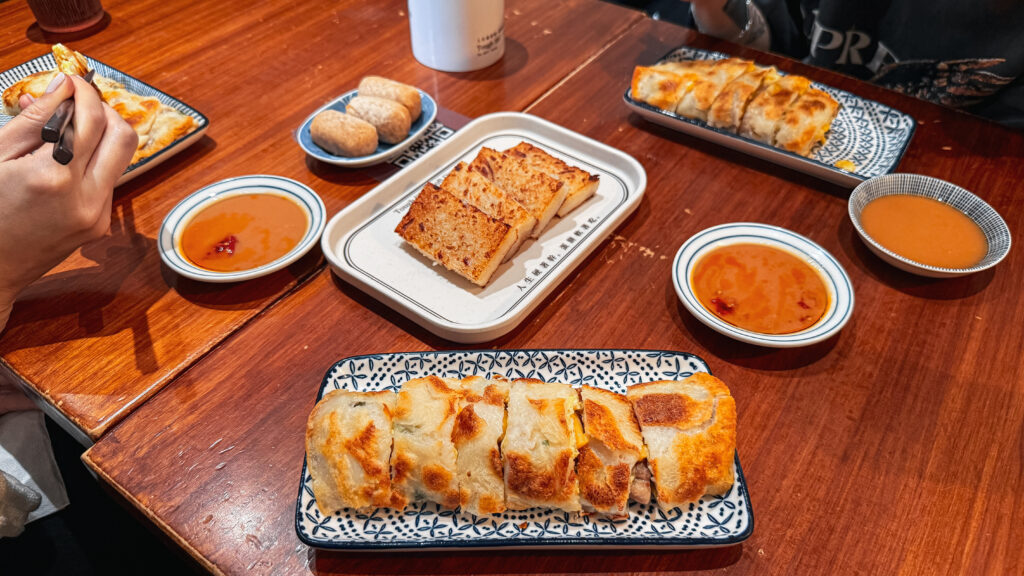
Breakfast at Soft Power (軟食力 行天宮店)
Map: Open in Google Maps
Start with breakfast at 軟食力, near Xingtian Temple. Taiwanese breakfast shops are one of the things I miss most in London, and a sit-down breakfast before a day of walking is a very Taipei way to start.
Afterwards, walk over to Xingtian Temple (行天宮). (Google Maps) It was built in 1967 and is dedicated to Guan Yu, the patron of businesspeople and, among other things, police officers. In 2014 it became the first temple in Taiwan to stop burning incense, to cut air pollution, so it’s calmer inside than most big temples.
Huashan 1914 Creative Park (華山1914文化創意產業園區)
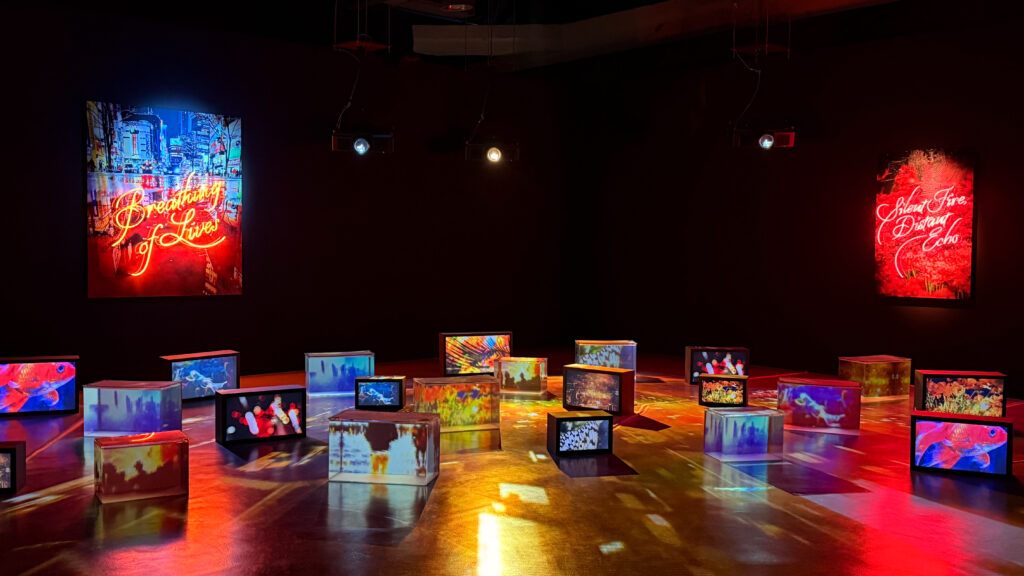
Map: Open in Google Maps
Huashan started life in 1914 as a sake brewery and went on making alcohol for more than seventy years, until the factory moved out in 1987. Artists took over the empty buildings in the late 1990s, and it’s now a park of red-brick warehouses, chimneys, exhibition halls and small independent shops.
There’s no single thing you have to see. Check what exhibitions are on, wander, and sit on the lawn for a while. It’s one of the easiest places in Taipei to lose an afternoon.
Shaved ice at SnowMie (綿雪), Tianmu
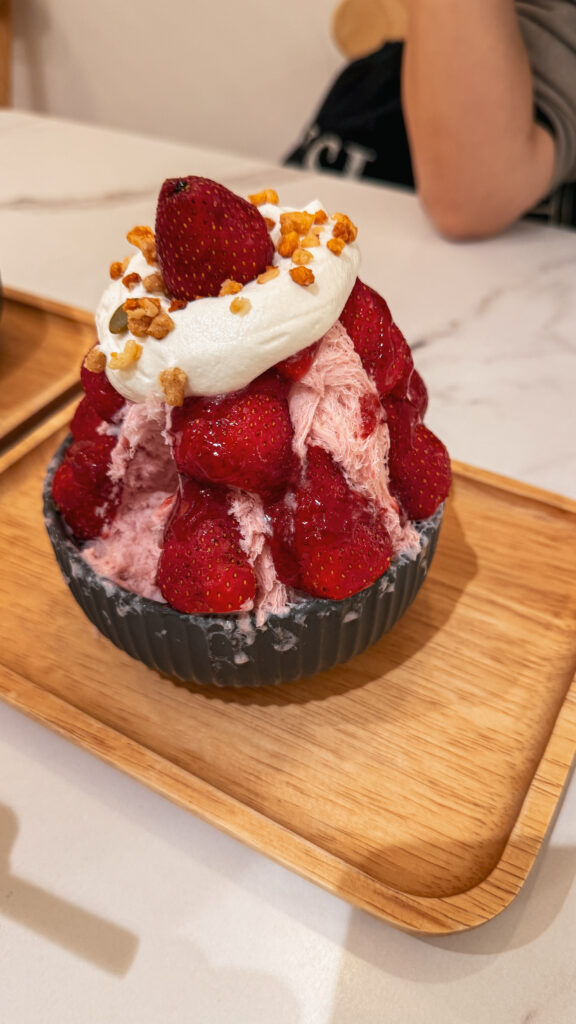
Map: Open in Google Maps
Finish the day with shaved ice at SnowMie. It’s up in Tianmu (天母), north of the centre, so it’s worth the short trip. In Taipei it doesn’t matter what month it is, there’s always room for shaved ice.
Day 4: Beitou hot springs
If you go up Yangmingshan early in the morning, Beitou is the place to go in the afternoon. On this trip I gave it a whole day, and it deserved it. I lived here for a while, so this part of Taipei feels a little like coming home.
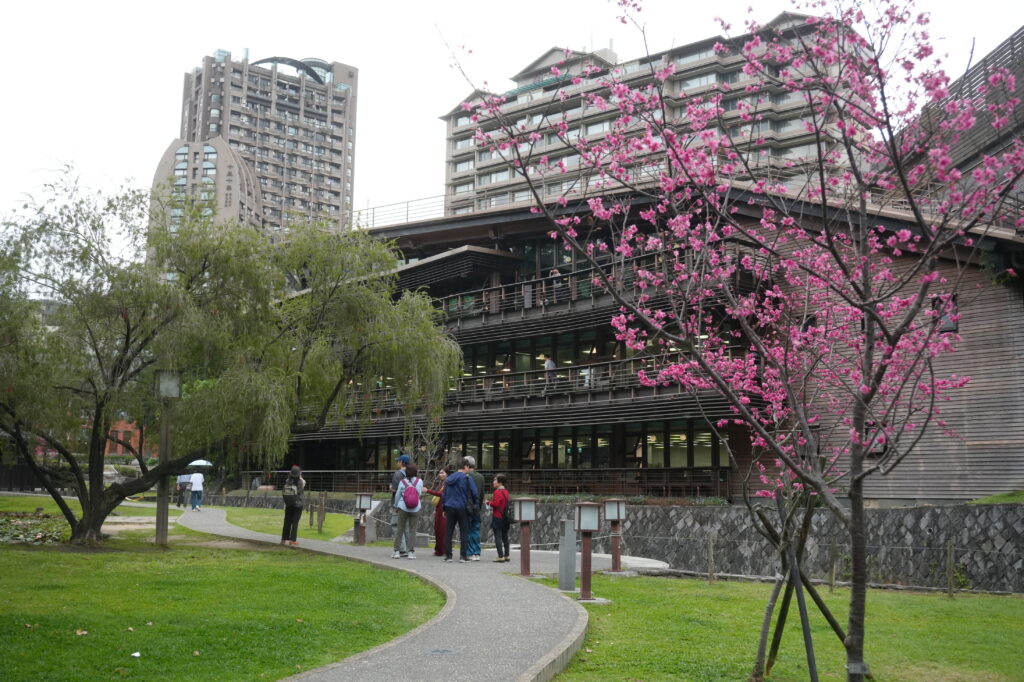
The name Beitou is often traced to a word in the language of the Ketagalan, the Indigenous people of the area, usually translated as “witch”. Once you see steam rising out of the ground, you understand why. Hot spring inns started opening here under Japanese rule in the 1890s, and the neighbourhood has been a spa town ever since.
Sulphur Valley (硫磺谷)
Map: Open in Google Maps
Sulphur Valley sits on the hillside above Beitou. You smell it before you see it. Yellow rock, steaming vents, and a boardwalk that takes you right through the middle. It’s a good reminder that Taipei sits next to a volcanic field.
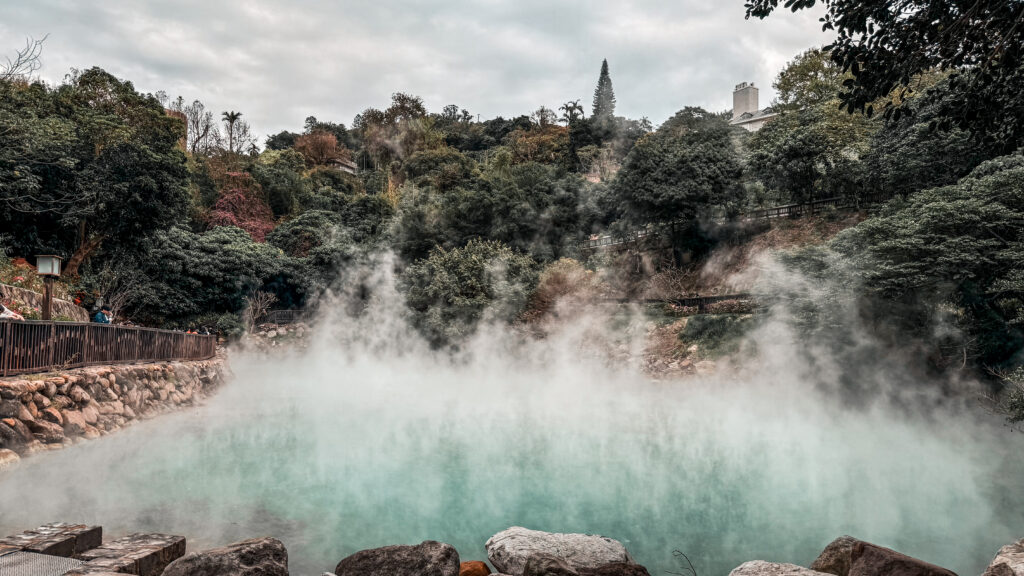
Thermal Valley (地熱谷)
Map: Open in Google Maps
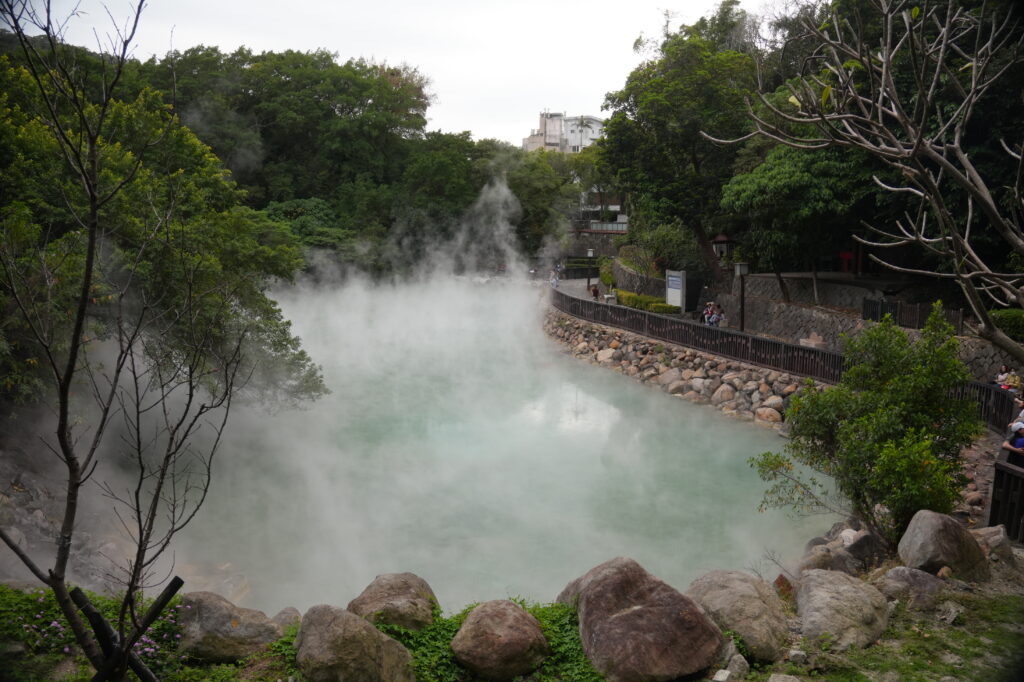
Thermal Valley is the other kind of spring. The water here is “green sulphur” (青磺), strongly acidic, and at the source it reaches around 98°C. People used to call it Hell Valley, and in the Japanese era it was named one of Taiwan’s great scenic spots. You can’t touch anything. You stand at the railings in the steam and watch it roll across the pale green water.
I remember when you could boil eggs in the spring here. People would lower them into the water and wait. It was banned in 1993, after regular scalding accidents and because the eggs were polluting the spring. The water also contains natural arsenic and lead, so it was never really something you should eat from. It was the right decision, but it’s still a shame. It was a fun thing to do.
Beitou Hot Spring Museum (北投溫泉博物館)
Map: Open in Google Maps
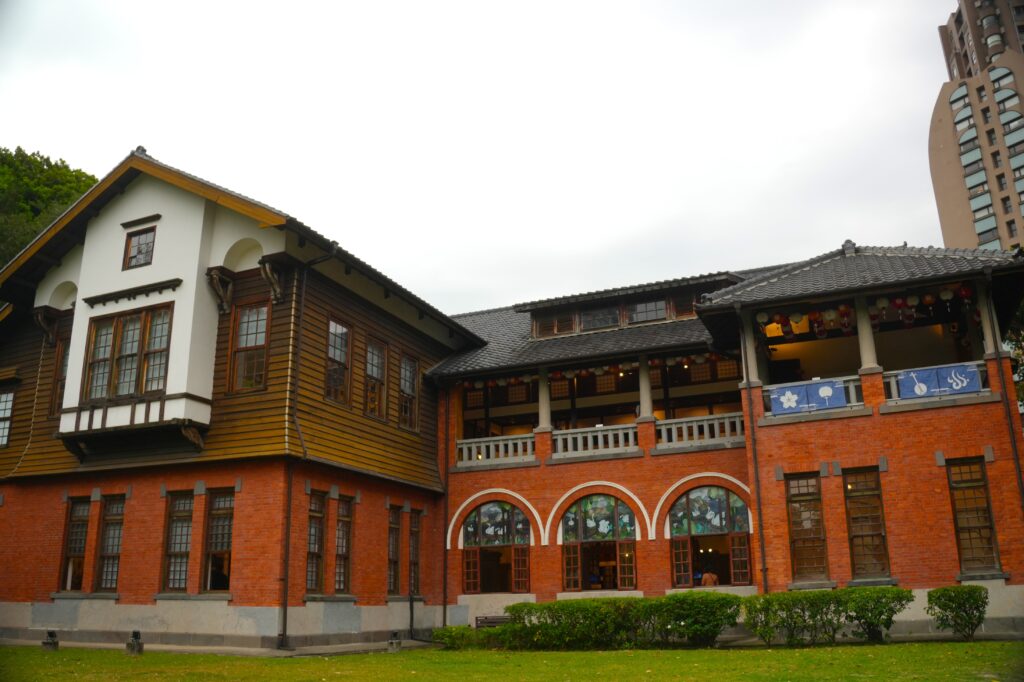
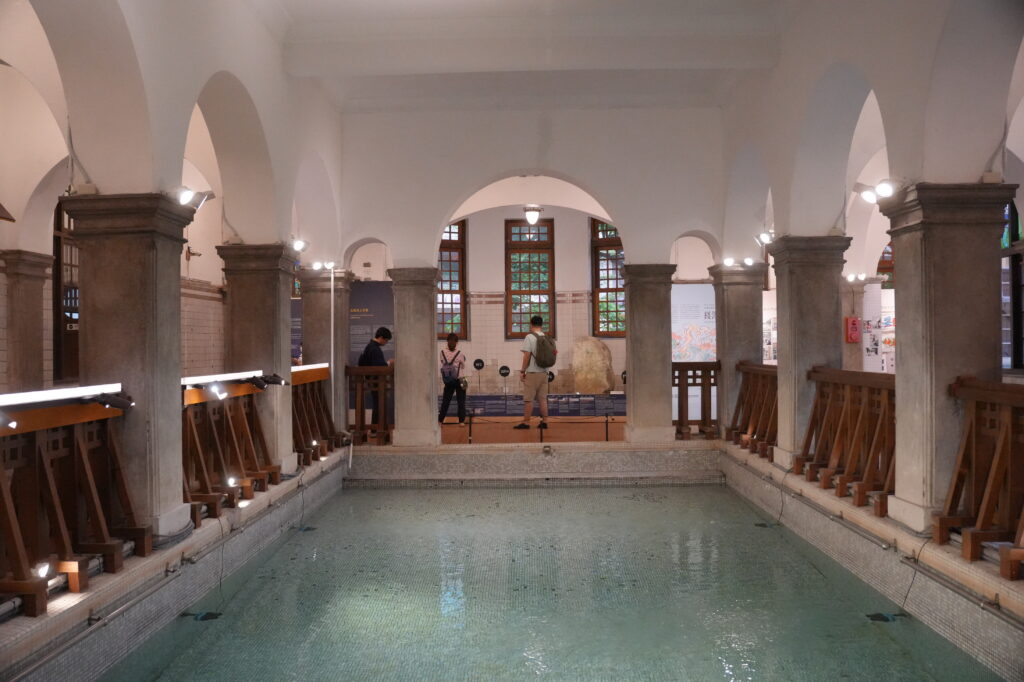
The museum opened in 1913 as a public bathhouse, modelled on a hot spring in Shizuoka, Japan. It’s red brick below and timber above. Downstairs is the original main bath, ringed with arches and stained-glass windows. It’s hard to believe people once just came in off the street for a soak.
Upstairs is the tatami hall, where bathers rested after the bath. It’s my favourite room in Beitou: wide open, with big windows and light coming in from the park. After the war the building was left to decay. It was restored and reopened as a museum in 1998, and it’s free to enter.
Tip: It’s closed on Mondays. You’ll be asked to take your shoes off at the entrance.
Xinbeitou Historic Station (新北投車站)
Map: Open in Google Maps
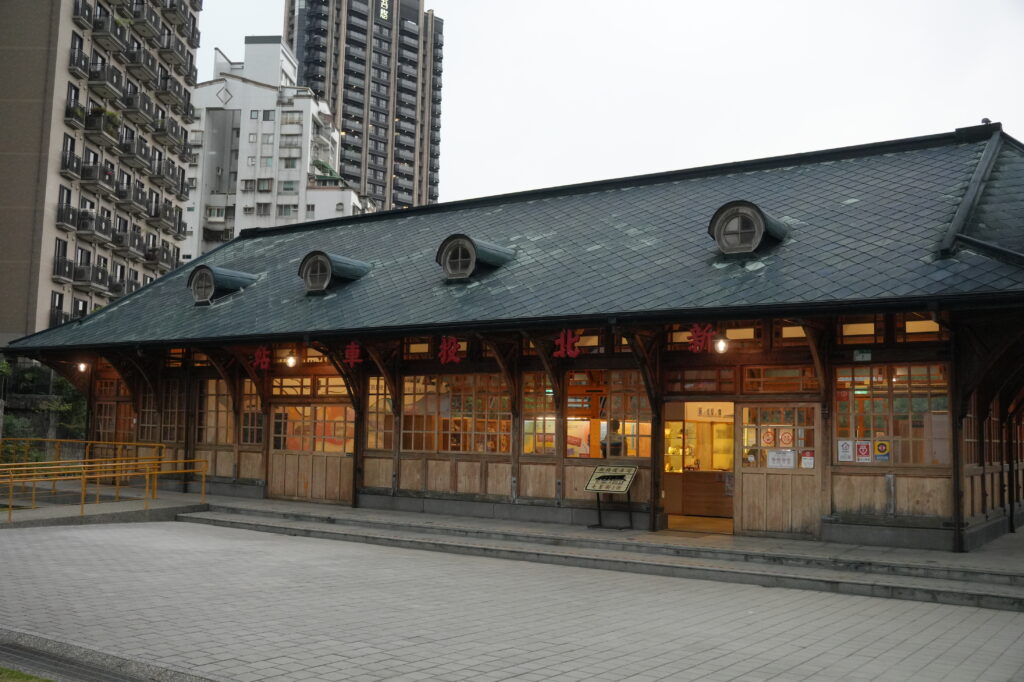
This little wooden station opened in 1916 to bring day-trippers from Taipei to the hot springs. When the line closed in 1988, the station was taken apart and moved to a theme park in Changhua, in central Taiwan, where it stayed for twenty-five years. It was brought back in pieces and rebuilt in 2017 in Qixing Park, about fifty metres from where it first stood.
Marshall Zen Garden (少帥禪園)
Map: Open in Google Maps
If you have time, keep walking uphill. Marshall Zen Garden began in the 1920s as a Japanese hot spring inn. During the Second World War it was used by the Japanese military as a rest house for kamikaze pilots. Later it was one of the places where Zhang Xueliang, the “Young Marshal” who led the 1936 Xi’an Incident, was kept under house arrest after the government moved to Taiwan.
Today Marshall Zen Garden is a restaurant, tea house and hot spring with a view over Beitou and the mountains. It’s my favourite place in the area for a long afternoon tea: you sit, talk, watch the hills, and nobody hurries you.
Where to eat in Beitou
This is where I’m least objective, because some of these I’ve been eating since I was a kid.
吳家牛肉麵店 (Wu Beef Noodles)
Map: Open in Google Maps
I’ve been eating here since I was small. Proper Taiwanese beef noodle soup, no reinvention.
新豐特製綿綿冰 (North Pole Soft Ice Special Shop)
Map: Open in Google Maps
Another childhood staple. It’s snow ice so fine it’s closer to soft ice cream than shaved ice. It’s takeaway only, and they announce closing days on their Facebook page, so check before you make the trip.
雙月食品社, Beitou branch
Map: Open in Google Maps
A chain with several branches, and I’d happily eat at any of them. Order the chicken soup and the 愛恨椒芝麵 (chilli-and-sesame noodles), then order more side dishes than you think you need. The side dishes are half the point.
蓬萊台菜餐廳 (Penglai Tai Cai Restaurant)
Map: Open in Google Maps
My top pick for traditional Taiwanese food, if you want to see what a proper Taiwanese banquet-style menu looks like.
梅苑小館
Map: Open in Google Maps
My second Taiwanese-food recommendation. It looks very plain from the outside. Ignore that, because the food is really good.
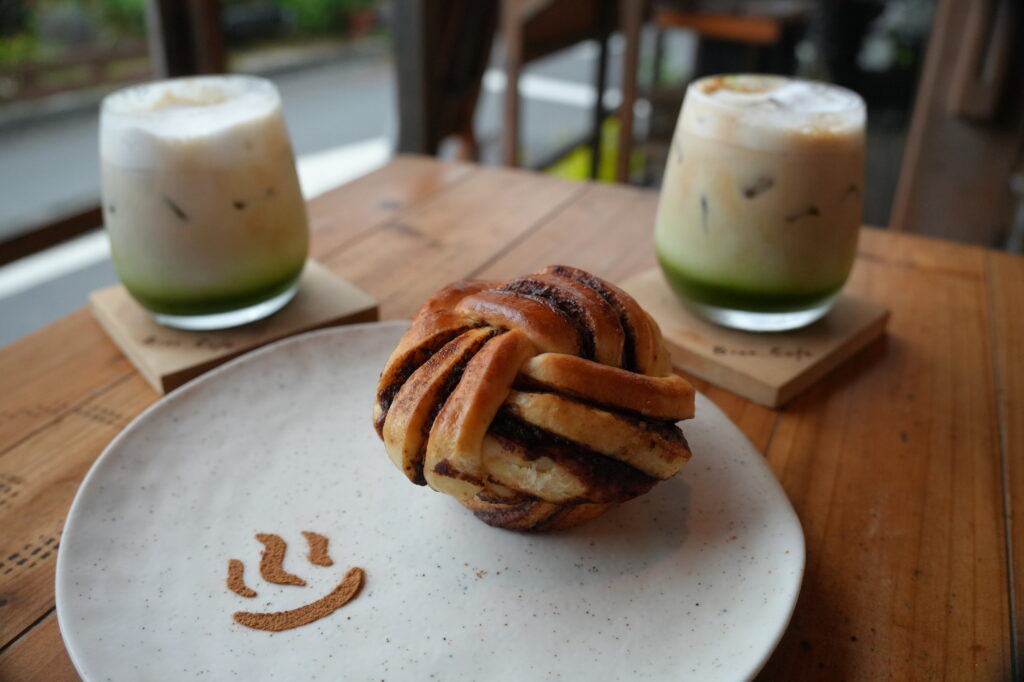
山邊咖啡 (Brae Café)
Map: Open in Google Maps
A small café that’s perfect for a break between sights. Order the cinnamon roll.
What I’d do differently
I’d go up Qingtiangang earlier. The views are clearest in the morning, and in summer the afternoon storms on Yangmingshan are regular enough to plan around. Get the bus at 8am, not 10.
I’d book the Beitou hotel for the last night from the start. The neighbourhood feels completely different once the day-trippers leave and the steam comes up in the evening.
And I’d leave more room in Beitou for eating. There are too many places on that list for one afternoon.
The Taipei most visitors see is real, but it’s the version for the first visit. This is the one I’d want you to see on the second.
Useful links
- Tamsui Historical Museum (Fort San Domingo, Little White House, Tada Eikichi’s Residence)
- Chen Cheng-po Cultural Foundation: Tamsui Outdoor Gallery
- Yangmingshan National Park
- Taipei eBus (bus S15 and 108 times)
- Xingtian Temple
- Huashan 1914 Creative Park
- Beitou Hot Spring Museum
- Xinbeitou Historic Station
- Marshall Zen Garden
- Taipei MRT route map